

Opinion: Money Matters
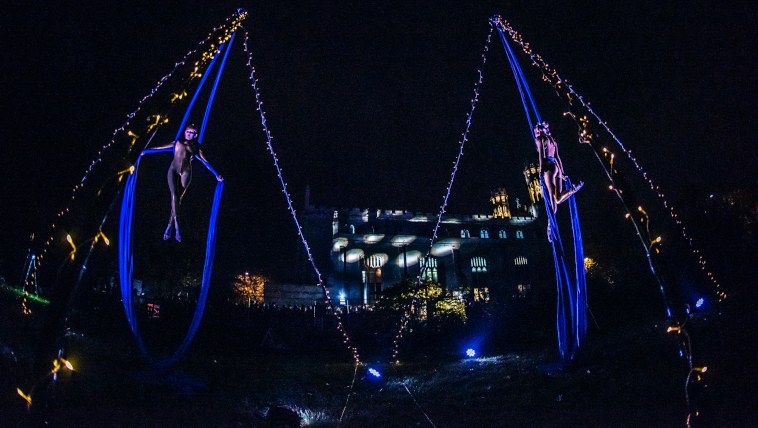
Art is circus, not economic gymnastics - Image by Khali Ackford
As Peter Holbrook, CEO of Social Enterprise UK, challenges the definition of the £428bn “impact economy”, our CEO Emma Harvey asks, what if we stopped counting?
Money Matters: Or why should we stop counting
A quiet shift’s been happening towards the language of economic impact underpinning most conversations about the value of arts, culture and civic life. It’s about maths right so it’s important, or so we tell ourselves. Only, it doesn’t hold any value to us or our people. A kind of gymnastics, only it's all contortion without a rhythm or flow and leaves us feeling hollow. If you’ve found yourself sleepwalking into measuring legitimacy through this lens and wondered, how did we get here? you're not alone.
Profit isn’t a dirty word. Many charities are social enterprises in some form and should absolutely measure profitability. We know what makes a surplus and what that surplus has to carry. Whoever you are - and especially if you have less of it - financial literacy is survival. Money matters.
But it is also reductive. It flattens complex human work into numbers never designed to hold it. And we’ve seen what happens when this logic hardens. Take NEET contracts reengaging 16-18 year olds. Early on at Trinity we were able to make contacts like this work, to give intensive support to those young people whose needed it most. But over successive contract cycles, payment-by-results milestones became unattainable for smaller providers, shifting provision towards volume. Quietly, young people were sorted into those who were fixable and fundable and those too costly to help. If value’s only defined economically, what becomes of us unviables?
Economic impact does little to convert minds not already convinced. The economic case for culture has been made repeatedly by folk with far more letters after their names than me. We know about local economic multiplier effects and how vibrant cultural spaces animate high streets. When art makes a place thrive speculative investment often follows. That movement of money is all the proof you need.
Getting small organisations to count what doesn’t matter all that much to people distracts and detracts, pulling scarce energy towards chasing ghosts. Time is spent proving, calculating and modelling experiences into metrics to services decision-makers we may never meet. It shapes programmes around what can be counted rather than what is needed. Measurement isn’t neutral; it consumes time, attention and worst of all our spirit. And like any beast, we’ll never fully sate it.
Economic impact language blurs the boundary between profit and purpose. Peter Holbrook, chief executive of Social Enterprise UK, recently warned of this risk, with the £428bn “impact economy” defined in a way favouring investor-led models over ones built explicitly for public benefit. When everything is framed within the same metrics it’s a game we can’t win. It allows those primarily driven by profit to say, “Oh yes, we also care too”. And then carbon offsetting permits continued extraction and recycling bins in clothing stores capture our sense of doing good while production patterns remain unchanged. Language that - if we also adopt it - softens the edges of power structures to allow them to remain unchallenged.
Community organisations cannot outcompete on terrain designed for capital and conquest. Adopting this language without challenge collapses extraction and reinvestment, shareholder return and community accountability. The promise that continued growth will eventually lift everyone impact rests on a fading ideology and many communities have lived long enough through iterations of that promise to treat it with scepticism. That’s dangerous especially right now because it deepens disenfranchisement of those who already have lost trust and faith in decision-makers' intentions. Growth is happening just not for you. You don’t matter to us.
When we centre growth as proof of value we risk reinforcing the same scarcity logic that traps minds and builds conflict. Someone else out there is winning whilst I’m losing. We risk aligning ourselves with a world that many already experience as failing them. When growth doesn’t translate into feeling better off, people look sideways to see who is benefitting. And then we're in cookie cartoon territory, where the dude sits behind a plate piled high pointing at the one due opposite the other whilst saying, He's taking what's yours. It's data to stoke tension between those who feel they’re losing out because of a notion of a transaction happening elsewhere that’s making someone else better off. And as we're all butting heads, deeper extraction continues unchecked.
Money matters for most only in the direct transaction sense. Pay people to do the work that needs to be done as well as you can afford. Don’t ask artists to work for free. Pay young people for their time. Pay communities for their advice. Do not ask people to do more with less while citing economic impact. Don’t push the boulder up the hill by exploiting your team or yourself. If a claim made somewhere doesn’t translate to wages if folks’ pockets it’s a story that rings hollow. I can’t pay my bills with your data.
None of this means abandoning accountability to funders. We should measure what keeps us afloat and be transparent about our finances. When asked to show GVA, it might be worth asking what they’re looking to understand from those numbers, who needs to be assured and whether the absence of economic data lessens the legitimacy of the work. If their response is to scratch their heads and say they don't know and that someone further up the chain is asking, that might at least give us pause for thought. Provide the data and still ask the questions, because following instructions unquestioningly is how we uphold bureaucracies at the expense of ourselves until we all wind up doing more work for less meaning, trapped in a system that rewards compliance over change.
There is no reason for thinking
That, if you give a chance for people to think or live
The arts of thought or life will suffer and become rougher
And not return more than you could ever give
Louis MacNeice, Autumn Journal (1939)
From Use or Ornament, Comedia’s report on the social value of the arts, 1997
At Trinity, I cannot promise folk I’ll make them rich. What I hope we offer is a place for people to come to find connection and build meaning together. A place where stories are shared, mistakes are made and power is practised differently, even if it doesn’t always work out. People come at times at a crossroads in their lives and often move onto bigger and better things. Like that old slouchy jumper, you love it till you wear it right through. It’s a place where value is measured by knowledge, energy and commitment to making things as good as possible with what we have.
The only real arbiter of wealth is the money in my pocket. In what I can give that I don’t need paid back. In the time that it affords me to worry about it less and care about what gives me meaning more. “What is it that breathes fire into the equations and makes a universe for them to describe?” said Stephen Hawking. Is the arbiter of our worth counted by pounds and pence or the smile on our face at the end of the day and the energy we find to get up again tomorrow. In this world of the now that’s rich with data yet poor on trust, culture’s the fuel for growth, turbo charging connection, courage and conviction. Right now, that may be the more honest thing to count.
This is an opinion piece by Emma Harvey, CEO