

Stop Consulting Citizens: Start Sharing Power
Photo by Ciara Hillyer
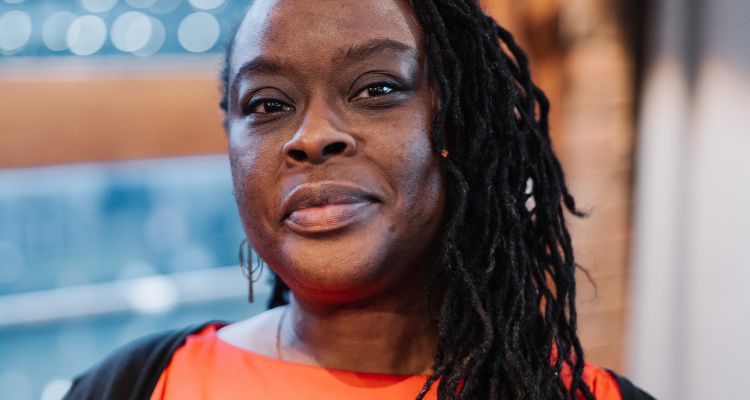
By LaToyah McAllister-Jones, Citizens for Culture / Co-Lead Facilitator
The cultural sector often talks about participation.
We talk about engagement.
We talk about listening.
But a month after launching the Citizens for Culture report, the outcome of the UK’s first Citizens’ Assembly for Culture in the West of England, I think we need to ask a harder question:
Are we really ready to share power?
Because citizen-led work doesn’t just produce plans.
It exposes how decisions are made, who makes them, and how willing we are to change.
The response to the report has been overwhelmingly positive. Across the region, there has been curiosity and genuine appetite for the work. But what matters now is not how warmly the plan has been received; it’s what we’re prepared to do differently as a result.
And that is where the real challenge begins.
The pace of trust, not the pace of systems
Citizen-led processes are slow.
They take time to listen properly. Time to deliberate. Time to work through the disagreement. Time to build shared understanding. Time to understand the trade-offs.
They move at the speed of trust rather than the speed of delivery targets or funding cycles.
Over the past four years, Citizens for Culture has developed through testing, learning and adaptation. Nothing was rushed. Nothing was fixed too early. Each stage shaped the next.
This runs counter to how much of our sector operates. Our systems and processes reward speed, certainty and control. We are used to producing strategies quickly and demonstrating immediate impact.
But if we genuinely want decisions shaped by lived experience and not assumptions, we have to honour the process. We cannot invite citizen voice and then contain it within systems that remain unchanged.
Deliberation is not delay.
It is democratic practice.
Consultation is not the same as sharing power.
For years, the cultural sector has been good at consultation.
Less good at redistributing influence.
Too often, participation happens at the edges of decision-making rather than at its centre. Citizens are invited to contribute, but rarely to shape priorities, resources or direction.
What has been different about Citizens for Culture is the coalition that has emerged around it. Across the West of England, local authorities, cultural organisations, funders and community partners have begun aligning around a shared direction, not through mandate, but through collective commitment.
This matters. Real change happens when people choose to move together.
But intent alone is not transformation. The real test is whether we are truly prepared to let citizen priorities influence how decisions are made, how resources are allocated and how organisations behave.
If participation does not shift power, it risks becoming performative, undermining the very people it set out to engage and collaborate with.
Sharing power means letting go
Citizen-led work asks something fundamentally different of institutions and leaders.
It asks organisations to listen before acting.
It asks expertise to sit alongside lived experience, not above it.
It asks leaders to loosen control and accept uncertainty.
This is not simply a new methodology. It is a shift in mindset.
And that shift can feel uncomfortable. It challenges professional identity and long-established ways of working. It requires humility and openness. It asks us to move from authority towards collaboration.
We need to be honest about that.
But if we want cultural policy that reflects the lives of the people it serves, this shift is not optional. It is necessary.
Discomfort is not a problem to solve.
It is evidence that something real is changing.
Strong partnerships, stronger responsibility
This work has been strengthened by partnership with Arts Council England and the West of England Combined Authority. Their involvement provides legitimacy, resource, and regional momentum. It signals that citizen voice should sit at the heart of cultural decision-making, not at the margins.
But institutional support must also lead to institutional change.
If citizen voice is to be centred rather than symbolic, systems of funding, governance and decision-making must evolve to reflect it. Otherwise, participation risks reinforcing the very structures it seeks to challenge.
The opportunity now is to embed this work, not simply endorse it.
Why this matters beyond culture
On a personal level, this work has reinforced my belief that people are ready to shape the systems that shape their lives. Designing adult-to-adult relationships that value people, time, and input produces open and engaged spaces.
What has often been missing is not capacity, but access.
Not interest, but invitation.
Not ideas, but influence.
At a time when trust in institutions is fragile, citizen assemblies offer something powerful: a way to reconnect decision-making with lived experience and rebuild relationships between people and public systems.
This is not only about cultural policy.
It is about democracy in practice.
What happens next is the real test.
We now move into the next phase of the work, the Citizens for Culture roadshow across the West of England.
This phase is not about presenting a finished plan. It is about working together to understand what delivery looks like in practice. It is about asking difficult questions:
What are we prepared to change?
What are we prepared to share?
What are we prepared to let go of?
The work ahead will be incremental. It will be complex. It will require courage from institutions and individuals alike.
But it offers the possibility of something different; cultural policy shaped with citizens, grounded in lived experience, and shared across the region.
That is the opportunity in front of us.
Come into the conversation.
If you’re part of an organisation, network, community group or partnership across the West of England and want to explore what this could mean for your work, invite us in.
The Citizens for Culture roadshow is about meeting people where they are: listening, challenging, learning together and working out what shared responsibility really looks like.
If this approach resonates with you, or even if it makes you uncomfortable, we want to hear from you.
Because sharing power only works when more of us are willing to try.
Sharing power is not a gesture; it’s an intentional choice. The question is whether we are ready to make it.