

What happens when you give emerging culture somewhere to grow?
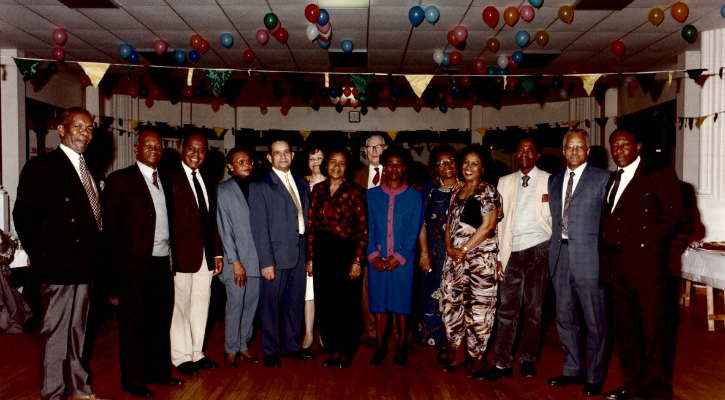
For Black History Month, Edson Burton looks back at the people, music and movements that have shaped Trinity, asking what that history tells us about the importance of giving emerging culture space to grow.
By Edson Burton
“One man’s trash is another man’s treasure.” My mangled version of this aphorism can be applied to the Trinity Centre.
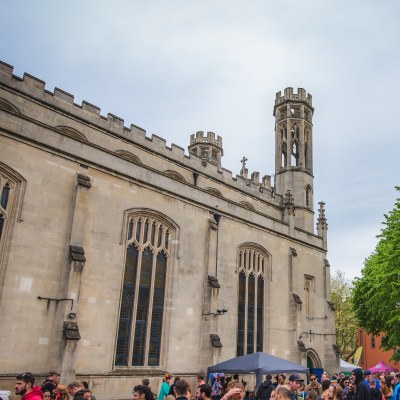
In the 1970s, with congregations falling and maintenance costs rising, the Diocese closed Holy Trinity Church. The building was acquired by Bristol Caribbean Community Enterprise (BCCE), one of several organisations formed by Caribbean migrants to respond to the needs of Bristol’s first and second generations.
Black Bristolians faced multiple levels of marginalisation, from unemployment and inequalities in education to exclusion from parts of Bristol’s nightlife.
Music captured the mood of the time. Creativity born of difficult circumstances was in abundance. Places to practise and express that creativity were not.
Creativity was in abundance. Places to practise and express that creativity were not.
BCCE saw in the cavernous former church an answer to some of the challenges facing the community. It offered skills training, meeting space and somewhere community groups could gather and rehearse. But a younger generation began to see another possibility for the building.
A space for reggae
Reggae was the voice of a younger generation. Heavily influenced by Rastafarianism, it spoke to the marginalisation of the Black poor in post-colonial Jamaica while also finding resonance in the experiences of a second generation of Black Britons.
As Richard Davis remembers:
“We still really didn’t have a lot of access to white clubs... West Indian party, that’s the main entertainment. Sound systems, Tarzan the High Priest, that was everything to us.”
Bristol’s reggae scene grew around sound-system culture. As audiences increased, pubs and blues parties could only accommodate so many people.
Trinity offered something those spaces couldn’t: room to grow.
Its 500 to 600-capacity hall provided a next step for Bristol’s developing reggae scene. Trinity outreach worker Roy De Freitas encouraged young people to use the building as a music venue and, from the late 1970s, Trinity became part of a network of grassroots venues providing a home for reggae.
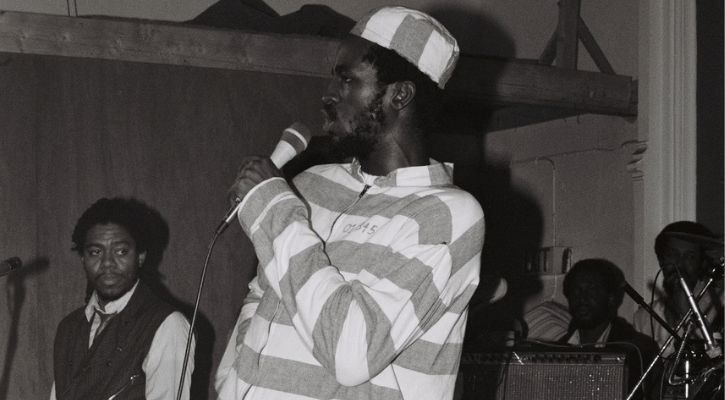
Bristol bands including Black Roots and Misty in Roots performed here, alongside artists including Eek-A-Mouse and dub poets Linton Kwesi Johnson and Benjamin Zephaniah.
These venues were platforming reggae artists well before the music attracted mainstream interest. They gave musicians somewhere to develop their craft in front of audiences deeply connected to the culture surrounding the music.
When cultures meet
Trinity also became one of the spaces where Black and white artists could meet, share ideas and create music.
Out of encounters across Bristol’s music scene came what would eventually become known as the Bristol Sound. Artists including Smith & Mighty and Massive Attack drew inspiration from sound-system culture, bringing influences from reggae and dub together with electronic production.
This is perhaps where the importance of cultural space becomes clearest. Providing somewhere for an existing scene to perform is one thing. Providing somewhere different people can encounter one another can lead to something nobody predicted.
From reggae to rave
After closing in 1984, Trinity reopened in 1987 and again became a home for emerging music.
Audiences gathered around house, hip hop and jungle, while Trinity’s grassroots ethos chimed with the free-party and rave scenes of the period.
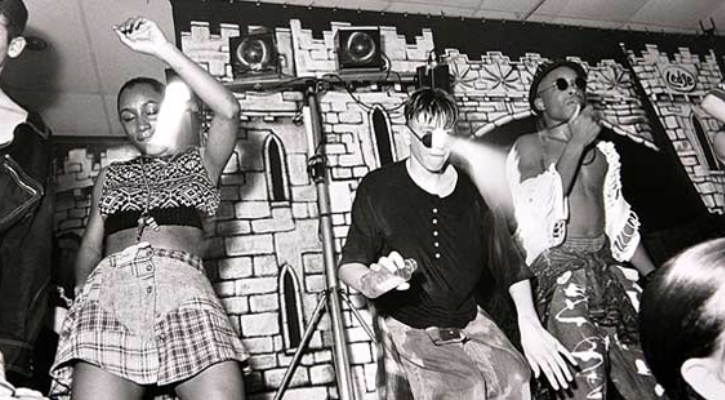
Club nights such as Ruffneck Ting brought artists including Roni Size, Krust and the Full Cycle crew to Trinity as jungle and drum and bass developed into major musical movements.
Live music evolved alongside club culture. The 1990s brought artists including Terry Callier, Galliano and Gil Scott-Heron, while hip hop acts including Public Enemy also appeared on Trinity’s stage.
Across different genres and generations, the pattern is remarkably similar. New sounds emerge outside the mainstream. People build communities around them. Those communities need somewhere to meet, perform and experiment.
Given the right space, they grow.
What does that history mean today?
Trinity reopened under new management in 2004. Since then, iconic sound systems have returned to the hall while new generations of artists have continued to reshape the musical influences that passed through the building before them.
But perhaps the lesson of Trinity’s history isn’t about any individual genre.
Again and again, cultural movements that were marginalised, dismissed or simply not yet understood by the mainstream found audiences in grassroots spaces. Reggae, sound-system culture, jungle and drum and bass did not arrive as established cultural institutions. People made them.
They needed somewhere to do it.
That leaves cultural spaces like Trinity with an important question today: are we prepared to make room for work before it is established, and give artists and communities space to experiment without already knowing the outcome?
Trinity’s history shows what can happen when we do.
Some of the sounds that once sat outside Bristol’s mainstream now form part of the city’s cultural identity. The challenge is creating the conditions in which the next generation can make something of their own.