<?xml version="1.0" encoding="utf-8" ?>
<rdf:RDF xmlns:rdf="http://www.w3.org/1999/02/22-rdf-syntax-ns#" xmlns:dc="http://purl.org/dc/elements/1.1/" xmlns:syn="http://purl.org/rss/1.0/modules/syndication/" xmlns="http://purl.org/rss/1.0/">


<channel rdf:about="https://ldap2.3ca.org.uk/search_rss">
  <title>Trinity Community Arts</title>
  <link>https://ldap2.3ca.org.uk</link>

  <description>
    
            These are the search results for the query, showing results 1 to 15.
        
  </description>


  <image rdf:resource="https://ldap2.3ca.org.uk/logo.png"/>

  <items>
    <rdf:Seq>
      
        <rdf:li rdf:resource="https://ldap2.3ca.org.uk/about/news/latest-news/saving-our-beacons"/>
      
      
        <rdf:li rdf:resource="https://ldap2.3ca.org.uk/about/news/latest-news/save-jacobs-wells-baths"/>
      
      
        <rdf:li rdf:resource="https://ldap2.3ca.org.uk/about/news/latest-news/curating-another-way-of-being"/>
      
      
        <rdf:li rdf:resource="https://ldap2.3ca.org.uk/activities/jacobs-wells/news/podcast-how-to-save-a-community-building"/>
      
      
        <rdf:li rdf:resource="https://ldap2.3ca.org.uk/about/news/latest-news/the-plebs-are-revolting"/>
      
      
        <rdf:li rdf:resource="https://ldap2.3ca.org.uk/about/news/latest-news/why-the-working-classes-dont-matter-in-the-arts"/>
      
      
        <rdf:li rdf:resource="https://ldap2.3ca.org.uk/about/news/latest-news/we-dream-they-rule-1"/>
      
      
        <rdf:li rdf:resource="https://ldap2.3ca.org.uk/about/news/latest-news/opinion-the-preservation-paradox-sell-now-pay-later"/>
      
      
        <rdf:li rdf:resource="https://ldap2.3ca.org.uk/about/news/latest-news/money-matters"/>
      
      
        <rdf:li rdf:resource="https://ldap2.3ca.org.uk/about/news/latest-news/migration-crimes"/>
      
      
        <rdf:li rdf:resource="https://ldap2.3ca.org.uk/about/news/latest-news/a-different-way-of-being"/>
      
      
        <rdf:li rdf:resource="https://ldap2.3ca.org.uk/about/news/latest-news/opinion-holding-onto-our-roofs"/>
      
      
        <rdf:li rdf:resource="https://ldap2.3ca.org.uk/about/news/latest-news/bristol-arts-funding"/>
      
      
        <rdf:li rdf:resource="https://ldap2.3ca.org.uk/activities/jacobs-wells/news/let-there-be-light"/>
      
      
        <rdf:li rdf:resource="https://ldap2.3ca.org.uk/contact/meet-the-team/emma/in-memoriam-phil-a-story-of-change"/>
      
    </rdf:Seq>
  </items>

</channel>


  <item rdf:about="https://ldap2.3ca.org.uk/about/news/latest-news/saving-our-beacons">
    <title> The space between us: saving our beacons</title>
    <link>https://ldap2.3ca.org.uk/about/news/latest-news/saving-our-beacons</link>
    <description>Trinity's 100 Beacons report shines a light on some of Bristol's much-loved Community buildings</description>
    <content:encoded xmlns:content="http://purl.org/rss/1.0/modules/content/"><![CDATA[<p class="BCX0 SCXW195267871 Paragraph"><img src="https://ldap2.3ca.org.uk/about/news/latest-news/100BeaconscreditDocklandsCommuityCentreFullCircle.jpg" alt="100 Beacons credit Docklands Commuity Centre Full Circle" class="image-inline" title="100 Beacons credit Docklands Commuity Centre Full Circle" /></p>
<p class="BCX0 SCXW195267871 Paragraph"><span class="discreet">Image credit: Docklands Community Centre/Full Circle</span></p>
<p class="BCX0 SCXW195267871 Paragraph">Dubbed by agencies across the voluntary sector as, ‘The Great British Sell-Off’, our shared heritage and civic assets, community and youth centres, libraries and public green spaces are being lost as part of the council funding crisis.</p>
<p class="BCX0 SCXW195267871 Paragraph">Bristol City Council’s 2022-23 budget announcement is framed with the proviso that further cuts will be needed to plug a <a class="BCX0 SCXW195267871 Hyperlink" href="https://www.bbc.co.uk/news/uk-england-bristol-59948740" rel="noreferrer noopener" target="_blank">£19.5m deficit</a>. This includes, “£3.5m by reviewing the buildings we own across all services.” With the statue debate still raging nationally, we’re sleepwalking into a future that, even prior to the pandemic, has already stripped Bristol of £30m worth of publicly owned assets.</p>
<blockquote class="pullquote"><span class="discreet">"If we continue to deplete our supply of places where we can read our first book, become a Scout, learn a language or a new dance move or play Bingo in our retirement, we’ll continue down the pathway to polarisation."</span></blockquote>
<p class="BCX0 SCXW195267871 Paragraph">The challenge is not in making such spaces loved, it’s in making them viable. We neglect the leaking community centre, or the inaccessible library, whilst trying to ‘level-up’, through investing in ‘transformative’ projects where the cost of the economic impact assessment alone would cover repairs and alterations across community spaces citywide. It’s hard to see how the building of an Arena or a multi-million concert hall refurb compensates us for the loss of the places where we connect with one another, make memories and build our sense of place and belonging in our everyday lives.</p>
<p class="BCX0 SCXW195267871 Paragraph">As costs of a few projects escalate to keep pace with aspiration, this increases the distance between the ‘viable’ and ‘non-viable’ spaces. If you’re a charity running a building, it’s almost impossible not to get caught on the capital conveyor belt to nowhere, in which we all chase an unattainable vision of the perfect building. Often, like Trinity, it’s what we’re legally constituted to “preserve” our asset. This means, even with the best intentions, we can end up leaving behind our stakeholders and our communities in the pursuit of building back better.</p>
<p class="BCX0 SCXW195267871 Paragraph">When we get swept up in the notion that a capital project is the priority above all else, we lose sight of the thing that makes buildings important in the first place; it’s the empty space within and the energy it’s filled with that matters more than the bricks and mortar.</p>
<p class="BCX0 SCXW195267871 Paragraph">We want to make Trinity the best venue it can be, just not at the expense of other venues or those who need the building in the first place and who have been happy using it even at its shabbiest. Balancing the need to future-proof and make a viable and sustainable Centre, whilst taking others with us and ensuring any investment is felt beyond our four walls.</p>
<p class="BCX0 SCXW195267871 Paragraph">This is why we produced the <a class="external-link" href="https://my.trinitybristol.org.uk/wp-content/uploads/2022/01/Trinity-Community-Arts-Lettings-A-Community-Canvas-building-the-case-for-community-infrastructure-2022-2026.pdf">100 Beacons report</a> in partnership with other venues and the Council to evidence the contribution of Bristol’s community assets, including the critical role they’ve played in providing local services as part of the COVID19 response.</p>
<p class="BCX0 SCXW195267871 Paragraph">As part of Bristol’s One City Plan, early indications are a commitment from the Council to invest in improvements to concessionary lettings, such as those referenced in our report. This could provide a lifeline to buildings owned by the city and managed on our behalf. As the budget is still in draft form, we still don’t yet know how this will translate into money to make neighbourhood hubs useable, accessible, green and COVID-Secure. However, this is at least an example of what can be achieved if we work together on what matters to people, to ensure spaces are retained for community use for the benefit of ourselves and future generations.</p>
<p class="BCX0 SCXW195267871 Paragraph">If we continue to deplete our supply of places where we can read our first book, become a Scout, learn a language or a new dance move or play Bingo in our retirement, we’ll continue down the pathway to polarisation. Such catastrophic loss to communities makes it easy to develop false attachments to an effigy of a slaver not designed with us in mind, whilst increasing our resentment towards those we see as encroaching on any space we feel we have left, be it the immigrant or the gentrifier.</p>
<p class="BCX0 SCXW195267871 Paragraph">If only those advocating to preserve commemorative statues put even a fraction of that energy into campaigning to save their local heritage asset or civic space, volunteer at their local community or youth centre, or set up a regular social activity in their local library we’d all feel the positive effects. As we continue to navigate the isolating impact of a period of successive restrictions, it’s the spaces that reduce the distance between us that help us to level-up, culturally, socially and economically.</p>
<p class="BCX0 SCXW195267871 Paragraph">Emma Harvey, CEO</p>
<p class="callout" style="text-align: center; ">Read the report: <a class="external-link" href="https://my.trinitybristol.org.uk/wp-content/uploads/2022/01/Trinity-Community-Arts-Lettings-A-Community-Canvas-building-the-case-for-community-infrastructure-2022-2026.pdf">A Community Canvas - building the case for community infrastructure 2022 - 2026</a></p>]]></content:encoded>
    <dc:publisher>No publisher</dc:publisher>
    <dc:creator>sarah</dc:creator>
    <dc:rights></dc:rights>
    
      <dc:subject>opinion</dc:subject>
    
    
      <dc:subject>jwb</dc:subject>
    
    
      <dc:subject>emma</dc:subject>
    
    
      <dc:subject>community</dc:subject>
    
    <dc:date>2022-01-21T10:40:00Z</dc:date>
    <dc:type>News Item</dc:type>
  </item>


  <item rdf:about="https://ldap2.3ca.org.uk/about/news/latest-news/save-jacobs-wells-baths">
    <title>Save Jacobs Wells Baths</title>
    <link>https://ldap2.3ca.org.uk/about/news/latest-news/save-jacobs-wells-baths</link>
    <description>The building may be sold privately as leisure company Fusion Lifestyle pull out of restoring and managing the asset</description>
    <content:encoded xmlns:content="http://purl.org/rss/1.0/modules/content/"><![CDATA[<p class="BCX0 SCXW69584607 Paragraph"><img src="https://ldap2.3ca.org.uk/about/news/latest-news/JWBartspacelifespacecopywright.jpg" alt="" class="image-inline" title="" /></p>
<p class="BCX0 SCXW69584607 Paragraph"><span class="discreet">Artwork credit ASLS</span></p>
<p class="BCX0 SCXW69584607 Paragraph"><strong>Trinity CEO Emma Harvey reflects on the importance of community buildings following the news that Jacob Wells Baths is now at risk of being taken out of public ownership.</strong></p>
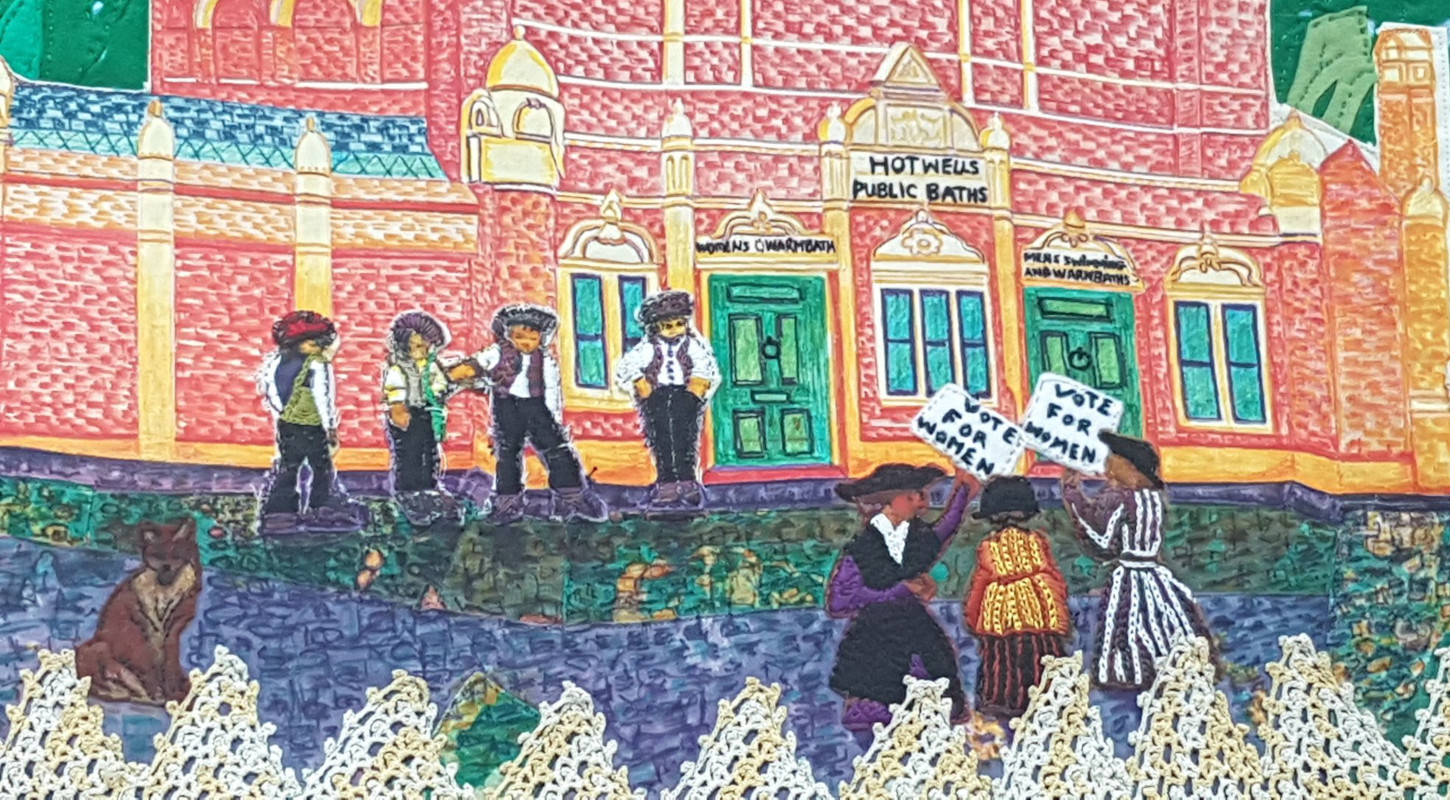
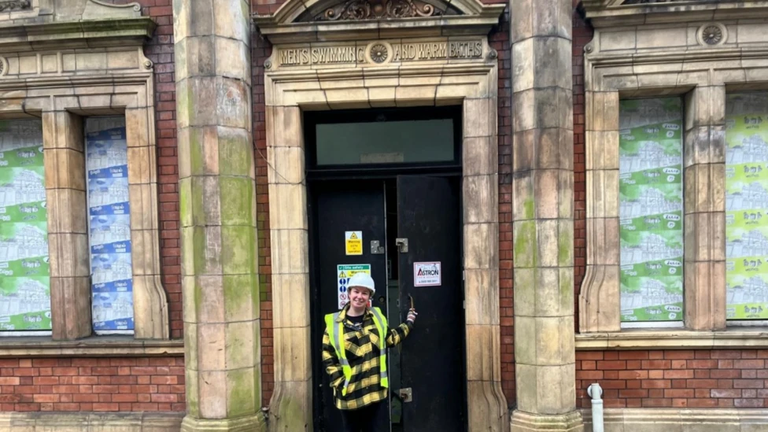
<p class="BCX0 SCXW69584607 Paragraph">Jacobs Wells Baths is an asset owned by us. Built in 1889<a class="external-link" href="http://www.bristolpost.co.uk/news/bristol-news/how-bristols-famous-cry-poor-6229150"> to serve the working poor</a>, the Grade II Listed building holds within its walls a wealth of of architectural and social heritage - from its time as a public swimming baths to its 30 year history as a dance hub.</p>
<p class="BCX0 SCXW69584607 Paragraph">This all risks being lost as, in December 2022, leisure company Fusion Lifestyle announced they were pulling out of restoring and managing the space meaning our cash-strapped local authority may now table it for disposal.</p>
<p class="BCX0 SCXW69584607 Paragraph">The story of this asset is sadly not unusual. A <a class="BCX0 SCXW69584607 Hyperlink" href="https://thebristolcable.org/2019/04/revealed-how-the-council-flogged-off-public-land-in-the-face-of-austerity/" rel="noreferrer noopener" target="_blank">2019 report by Bristol Cable</a> revealed how Bristol City Council has sold off millions of pounds’ worth of public property as part of their ongoing response to austerity. This local saga is set against a national backdrop dubbed as ‘The Great British Sell-Off’, with local authorities across the UK attempting to combat funding crises through sale of our shared civic and heritage spaces.</p>
<blockquote class="pullquote">"One thing you can say about Bristol is we’re a city that has demonstrated we can take complex heritage assets and transform them into viable community and cultural hubs."</blockquote>
<p class="BCX0 SCXW69584607 Paragraph">It’s a pattern that shows no sign of stopping in 2023. Bristol faces yet another round of cuts and the pressure’s on to plug a £32m funding gap in whatever way possible. 134 years on from the Baths’ construction, it feels as though Bristol folk are still working hard though still very much the poorer for it.</p>
<p class="BCX0 SCXW69584607 Paragraph">It’s really easy to reduce these buildings to numbers on a spreadsheet. If we sell Jacobs Wells then the headache as to what to do with it next is finally over. Plus, we get some cash to plug a gap so we can all breathe a temporary sigh of relief until the next cycle of cuts. If you grew up poor it’s actually understandable. I’m sure many of us have memories of our parents pawning what few possessions they’d acquired just to make ends meet. It’s just what you do when you’re broke.</p>
<p class="BCX0 SCXW69584607 Paragraph">The problem though is that, when our Councils take this same attitude to balancing the books, this robs current and future generations of the assets we own and makes us all collectively poorer. In a city like Bristol, growing in density and diversity, it deprives us of places to come together, connect and share experiences. To learn and grow, to grieve or to celebrate. To keep fit, dance and be merry. To avoid loneliness or just to get out of the cold. Even to problem solve, mobilise and take collective action about the things that matter to us.</p>
<p class="BCX0 SCXW69584607 Paragraph">What is unusual about Bristol though is that for every Jacobs Wells Baths there are other success stories that run counter to this ‘sold from under you’ narrative. From Spike Island, to Watershed, to the Tobacco Factory, one thing you can say about Bristol is we’re a city that has demonstrated we can take complex heritage assets and transform them into viable community and cultural hubs.</p>
<p class="BCX0 SCXW69584607 Paragraph">The Trinity Centre is one such building as over the last 15 years we have demonstrated that we can take a big old dilapidated liability and transform it into a celebrated, multi-use arts and community asset.</p>
<p class="BCX0 SCXW69584607 Paragraph">So what’s stopping us from doing the same with JWB? Even with our track record, groups like Trinity just aren’t treated as serious contenders when the future of assets like Jacobs Wells Baths comes up for discussion. Maybe that’s because we don’t have millions of pounds at our disposal, or maybe its because I look like a Fraggle and talk like the love-child of Russell Brand and Janet Street-Porter. Decision makers just aren’t that great at trusting anyone to solve complex problems if the solution isn’t packaged in received pronunciation and a smart suit.</p>
<p class="BCX0 SCXW69584607 Paragraph">We don’t do it because we’re told we can’t, are scared to try or don’t believe we can. If we want to change this narrative this doesn’t start with the Council. It starts here and now with us. If we want to save our spaces and protect Jacobs Wells Baths and other shared civic spaces for this and future generations, as citizens we need to come together and say we want one last shot at reimagining a different future.</p>
<p class="BCX0 SCXW69584607 Paragraph">The Council may be the landlord but these buildings are ours. Once they’re gone they’re gone and there is no going back. We just need to believe for a moment that we can do this Bristol. Let’s put our heads and voices together and make it happen.</p>
<p class="BCX0 SCXW69584607 Paragraph">Take action today:</p>
<ul>
<li><a class="external-link" href="https://www.theyworkforyou.com/">Contact your Councillor and MP</a> – write to them about why JWB is important</li>
<li>Prepare a statement for local Cabinet</li>
<li><a class="external-link" href="https://my.trinitybristol.org.uk/wp-content/uploads/2023/01/JWB-2015-PH3Designs-1501428F.pdf">Check out past feasibility study and plans for viable asset management</a></li>
<li>Send your support to ensure it is <a class="external-link" href="https://mycommunity.org.uk/nominating-an-asset-of-community-value-acv-and-community-right-to-bid">registered as an Asset of Community Value</a></li>
<li>Share on social media using the tags #SaveOurSpaces #SoldFromUnderYou #SaveJWB</li>
<li>Read our <a href="https://ldap2.3ca.org.uk/about/news/2021/100beacons" class="internal-link">100 Beacons Report </a> and find out more about<a href="https://ldap2.3ca.org.uk/about/news/latest-news/right-here" class="internal-link"> Power to Changes We're Right Here Campaign </a></li>
</ul>]]></content:encoded>
    <dc:publisher>No publisher</dc:publisher>
    <dc:creator>sarah</dc:creator>
    <dc:rights></dc:rights>
    
      <dc:subject>emma</dc:subject>
    
    
      <dc:subject>heritage</dc:subject>
    
    
      <dc:subject>opinion</dc:subject>
    
    
      <dc:subject>jwb</dc:subject>
    
    
      <dc:subject>trinity</dc:subject>
    
    <dc:date>2023-01-05T17:30:00Z</dc:date>
    <dc:type>News Item</dc:type>
  </item>


  <item rdf:about="https://ldap2.3ca.org.uk/about/news/latest-news/curating-another-way-of-being">
    <title>Podcast:Curating another way of being</title>
    <link>https://ldap2.3ca.org.uk/about/news/latest-news/curating-another-way-of-being</link>
    <description>Field Notes from across the UK’s community asset sector

</description>
    <content:encoded xmlns:content="http://purl.org/rss/1.0/modules/content/"><![CDATA[<p><iframe frameborder="0" height="400" src="https://www.youtube.com/embed/G-xKN_72Wdo?si=bU6524VgXWo0Dehz" title="YouTube video player" width="725"></iframe></p>
<div></div>
<p><strong> Field Notes from across the UK’s community asset sector</strong></p>
<p><i>We’re Right Here’s </i>Gallery of Broken Dreams is a powerful exhibition highlighting the loss of cherished community spaces across the UK. Since 2015, we've lost over 75,000 community, cultural and civic assets as local authorities have sold-off spaces to plug gaps in their revenue budgets.</p>
<p>It's a bit of a sorry story. But, there are people working across the country to try to stem that tide and save our spaces.</p>
<p>These community and cultural champions are uniting threads across our divisions and weaving them into a new tapestry. They're telling different stories to the ones we’re told to believe. They're overcoming individualism, choosing instead to inspire collective ways of meeting and making change. They're not waiting to be invited, instead using their convening and connecting power to gain credibility and klout.</p>
<p>They're making, not just measuring, impact. They're showing us that joy is a right, not a privilege. They're building models that are sustainable, not extractive. They're quietly, over time, eroding the barriers that force us to fear and fight amongst ourselves. They're showing us what good and fair health, housing and social outcomes could look like for all of us.</p>
<p>They are, each day, curating different way of being - for the good of each and every one of us.</p>
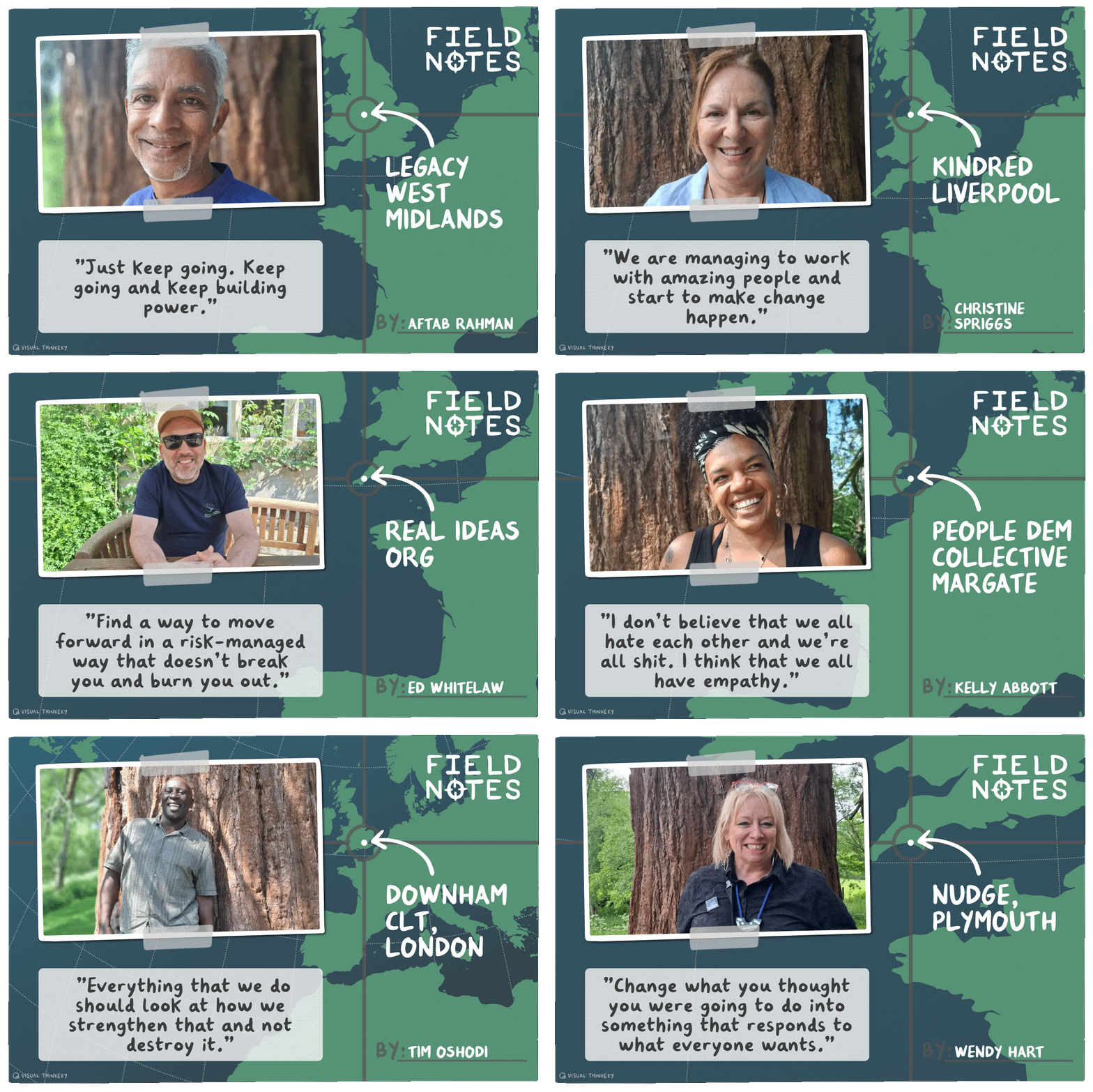
<p><span><span>This </span><strong>Field Notes</strong><span> series features just some of the inspiring stories from across the country </span></span>who form part of a much wider <strong><a class="external-link" href="http://mycelialnetwork.co.uk">Mycelial Network</a> of Community Asset Developers; </strong>local leaders who are transforming the civic and social landscape of the UK from the ground up.</p>
<p>With the Government's <i>Pride In Place: Impact Fund</i> just announced and the English Devolution and Community Empowerment Bill on the horizon - set to give communities increased powers to purchase the shared land under our feet - we hope these stories will serve as inspiration for communities and a powerful reminder that saving ourselves is possible; but that it involves all of us – right now.</p>
<p><img alt="Field Notes series — animated GIF" height="467" src="https://my.trinitybristol.org.uk/wp-content/uploads/2025/09/field-notes-series.gif" style="border: none; " width="700" /></p>
<p><strong>What you can do to help</strong></p>
<p><strong> </strong>- Amplify these stories across your networks; tell these stories over dinner, listen to the podcast with family and friends</p>
<p>- Share other stories like these in this spirit; you can make your own <a href="https://remixer.visualthinkery.com/a/fieldnotes">Field Notes postcard here</a></p>
<p><a href="https://remixer.visualthinkery.com/a/fieldnotes"></a>- Join a community, civic or cultural organisation in your area and be part of a movement for change</p>
<p>- Read about other people working in this space here as part of the <a class="external-link" href="https://www.right-here.org/museum-of-broken-dreams/">We're Right Here</a> campaign</p>
<p>#BuildCommunities #CommunityEmpowerment #SaveOurSpaces #SoldFromUnderYou #MycelialNetwork #CADFieldNotes #PrideinPlace</p>]]></content:encoded>
    <dc:publisher>No publisher</dc:publisher>
    <dc:creator>&lt;object object at 0x7fd3e9440580&gt;</dc:creator>
    <dc:rights></dc:rights>
    
      <dc:subject>emma</dc:subject>
    
    <dc:date>2025-09-30T13:05:00Z</dc:date>
    <dc:type>News Item</dc:type>
  </item>


  <item rdf:about="https://ldap2.3ca.org.uk/activities/jacobs-wells/news/podcast-how-to-save-a-community-building">
    <title>Podcast: How to Save a Community Building</title>
    <link>https://ldap2.3ca.org.uk/activities/jacobs-wells/news/podcast-how-to-save-a-community-building</link>
    <description>Trinity’s CEO Emma Harvey speaks with  Bristol Cable Editor, Priyanka Raval about what it takes to save our spaces</description>
    <content:encoded xmlns:content="http://purl.org/rss/1.0/modules/content/"><![CDATA[<p><img src="https://ldap2.3ca.org.uk/activities/jacobs-wells/news/fbf4f560ef7d11efbfccdf31b19992af.png/@@images/cf1527b1-6747-47a1-b519-caaea2eeee3a.png" alt="" class="image-inline" title="" /></p>
<p><strong>Podcast: <em>How to Save a Community Building – Insights from Trinity’s CEO Emma Harvey</em></strong></p>
<p>How do you bring a historic community building back into public hands? In this insightful podcast episode, Emma Harvey, CEO of Trinity in Bristol, shares a step-by-step account of what it really takes to save a civic asset; drawing on her leadership in the campaign to revive Jacobs Wells Baths.</p>
<p>From launching capital campaigns to navigating complex asset transfers, Emma breaks down the practical, political, and emotional aspects of community ownership. The conversation explores:</p>
<ul>
<li>
<p>Why community buildings matter — and what we lose when they're gone</p>
</li>
<li>
<p>How to build grassroots support and conduct meaningful local consultation</p>
</li>
<li>
<p>The value of phased fundraising and realistic feasibility studies</p>
</li>
<li>
<p>The role of local authorities, funders, and national policy in supporting asset transfer</p>
</li>
<li>
<p>Lessons learned and advice for others facing similar battles</p>
</li>
</ul>
<p>Whether you're a community organiser, policymaker, or curious citizen, this episode is packed with knowledge, encouragement, and a clear-eyed look at what it takes to protect the spaces that matter.</p>
<p>🕒 Runtime: ~50 minutes<br /> 📍 Featuring: Emma Harvey, CEO of Trinity, Bristol and Priyanka Raval, Editor, Bristol Cable</p>
<p><iframe frameborder="no" height="180" scrolling="no" src="https://share.transistor.fm/e/851d7ee1" width="100%"></iframe></p>
<p>If you liked this you can also listed to our <a class="external-link" href="https://www.bbc.co.uk/news/articles/c3w1p8n7y32o">BBC interview here</a>.</p>]]></content:encoded>
    <dc:publisher>No publisher</dc:publisher>
    <dc:creator>&lt;object object at 0x7fd3e9440580&gt;</dc:creator>
    <dc:rights></dc:rights>
    
      <dc:subject>emma</dc:subject>
    
    <dc:date>2025-05-23T10:20:00Z</dc:date>
    <dc:type>News Item</dc:type>
  </item>


  <item rdf:about="https://ldap2.3ca.org.uk/about/news/latest-news/the-plebs-are-revolting">
    <title>Opinion:The plebs are revolting!</title>
    <link>https://ldap2.3ca.org.uk/about/news/latest-news/the-plebs-are-revolting</link>
    <description>Why the route to reconnecting with audiences (and voters) might include citizens assemblies</description>
    <content:encoded xmlns:content="http://purl.org/rss/1.0/modules/content/"><![CDATA[<p class="western" style="line-height: 100%; margin-bottom: 0cm; text-align: right; "><img src="https://ldap2.3ca.org.uk/about/news/latest-news/alastairbrookeskolabstudios_trinitynewtownmural_2024_005.jpg/@@images/cf27aebf-e748-4682-8bdb-d9b8a7bb8e50.jpeg" alt="" class="image-inline" title="" /></p>
<p class="western" style="line-height: 100%; margin-bottom: 0cm; text-align: right; "><i><span class="discreet">Newtown mural making, image by Alistair Brookes</span></i></p>
<p align="left" class="western" style="line-height: 100%; margin-bottom: 0cm; "><strong>Why the </strong><strong>route </strong><strong>to reconnecting with audiences (and voters) might include citizens assemblies</strong></p>
<p align="left" class="western">This week, the National Gallery announced their new five-year plan to embed a citizens assembly as part of their decision making structure. This was followed by<i> </i>Melanie McDonagh’s<i> </i>Evening Standard piece (swiftly edited but originally titled, <span style="text-decoration: underline;"><a href="https://www.standard.co.uk/comment/national-gallery-curate-citizens-assembly-b1241445.html"><i>I'm sorry, but plebs shouldn't be curating the National Gallery</i></a></span><span style="text-decoration: underline;">)</span> making the case for the Gallery’s direction to continue to be decided - as it has been for the best part of two centuries - by <i>the appointed experts who know and care about art and who know what it is they want the rest of us to engage with.</i></p>
<p align="left" class="western">Scepticism about the unfamiliar is expected. When <span style="text-decoration: underline;"><a href="https://citizensforculture.info/">Citizens for Culture</a></span> started with a notion to embed citizen decision making in cultural strategic thinking in The West of England Region, I was both optimistic and wary. As we embarked on a citizen-led design stage, I expected to meet a bunch of citicynics wondering why we were asking them about culture when - from cost of living to global conflict - there were bigger fish to fry. I was instead met with engaged thoughtfulness and a unique bredth of cultural perspective that reinvigorated my enthusiasm about what a citizens assembly could offer to the arts.</p>
<p align="left" class="western">It is not news to anyone that our sector is in crisis. Costs have gone up whilst funding has, at best for many, remained static. With public sector investment declining as statutory obligations grow, the UK's cultural sector once again grasps for an idea of sustainability that moves ever further from reach.</p>
<p align="left" class="western">People more used to getting their voices heard may want to keep things as they were, but business as usual is no longer an option. Post-pandemic visitor numbers are down as curators scratch their heads wondering why their engagement team have failed to get the bums on their seats. Decolonising themes intended to reach diverse audiences can miss the mark if they only retell old stories through old structures.</p>
<p align="left" class="western">Just as our traditional two party politicking needs a rethink, so too do the structures that underpin our creative industries that - as well as many other key industries from the civil service to our judicial system - are significantly lacking in working-class representation.</p>
<p align="left" class="western">Columnists with platforms may have no interest in taking part, but that sentiment is not shared. Polling of Reform voters shows <a href="https://londonlovesbusiness.com/replacing-the-house-of-lords-with-a-citizens-assembly-would-increase-their-trust-in-politics/">replacing the House of Lords with a citizens assembly would increase their trust in politics</a>. With visitor numbers for many cultural institutions failing to pick back up to pre-pandemic levels, ignoring us plebs is costly.</p>
<p align="left" class="western">Consulting communities can miss the mark either because the right questions weren’t asked or space was not made for unexpected answers. Yes, we’re all biased and opinionated. We're also your audiences, your electorate your customers and (hopefully) your future employees. The more we cling to decision making models that don’t account for that spectrum of voice and opinion, the more we'll continue to decline.</p>
<p align="left" class="western">Assemblies may not give us all the answers, but they allow for deeper conversations about who we are and how we want to be governed, washed or unwashed. In a global network of online communities and distributed narratives, they can help to covert that which is reductive and disperate into a shared course of action, that gives us at least that bit of hope to catalyse change.</p>
<p align="left" class="western">This is the model pioneered by Nottingham’s <a href="https://www.nae.org.uk/voice/">New Art Exchange,</a> which has shifted the balance of power from one that is top down to one where their citizens assembly embedded in their structural governance. Participation isn’t forced. It is paid. Assembly members aren’t expected to replace the expertise of staff. They’re there to bring relevancy and meaning, with a board that continues to govern risk and a creative, curatorial crew who bring their relevant skills and specialisms to convert, elevate and actualise ideas. Artistic expertise isn’t being superseded, it's being enhanced through the power of that collective lens.</p>
<p align="left" class="western">The UK’s spectrum of heritage, identity and opinion is so broad, the idea that any one person could curate that in isolation is for the dinosaurs. Deciding together might feel messy but, as the models we know are failing us, assemblies give us a way to realise a kaleidoscope of possibility. We have an opportunity to start that decision making process from a different point, even if we’re not sure where we might end up. Will citizens assemblies solve our problems? I don’t know. I do know in an era of decentralised content and political discontent we are both our own curators and our best advocates.</p>
<p align="left" class="western">We ignore that at our peril.</p>
<p align="left" class="western"><i><span class="discreet">This is a personal opinion piece by <a href="https://ldap2.3ca.org.uk/contact/meet-the-team/emma" class="internal-link">Emma Harvey</a></span></i></p>]]></content:encoded>
    <dc:publisher>No publisher</dc:publisher>
    <dc:creator>&lt;object object at 0x7fd3e9440580&gt;</dc:creator>
    <dc:rights></dc:rights>
    
      <dc:subject>emma</dc:subject>
    
    <dc:date>2025-08-06T12:35:00Z</dc:date>
    <dc:type>News Item</dc:type>
  </item>


  <item rdf:about="https://ldap2.3ca.org.uk/about/news/latest-news/why-the-working-classes-dont-matter-in-the-arts">
    <title>Opinion: Why The Working-Classes Don’t Matter in the Arts</title>
    <link>https://ldap2.3ca.org.uk/about/news/latest-news/why-the-working-classes-dont-matter-in-the-arts</link>
    <description>Emma Harvey, Trinity CEO, shares her opinions on the underrepresentation of people from working class backgrounds in the arts</description>
    <content:encoded xmlns:content="http://purl.org/rss/1.0/modules/content/"><![CDATA[<p align="left" class="western" style="line-height: 100%; margin-bottom: 0cm; "><img src="https://ldap2.3ca.org.uk/em.jpg/@@images/3f5ebf6a-aeb9-4b21-8fb0-af1b6f83785a.jpeg" alt="" class="image-inline" title="" /></p>
<p class="western" style="line-height: 100%; margin-bottom: 0cm; text-align: right; "><i>Me, way back when</i></p>
<p align="left" class="western">Emma Harvey, Trinity CEO, shares her opinions on the underrepresentation of people from working class backgrounds in the arts</p>
<p align="left" class="western">The cultural sector in the UK falls short on various measures of diversity and, starkly, fewer than one in 10 arts workers come from working-class backgrounds.</p>
<p align="left" class="western">Being one of those one in 10, I can testify that people who sound and behave like me, or who share my cultural references are a rare species, particularly in leadership roles. One key reason for this is that success in the arts is often determined by access to established networks and the ability to leverage those connections to progress ideas, secure paid work and obtain funding.</p>
<p align="left" class="western">One of my first funding applications for Trinity way back when was met with a rapturous response from the funder, who said they were excited to include us in their portfolio, but they wouldn’t be giving us any actual money. It was my first lesson in a long series of lessons: for Trinity – and me – to succeed, I would have to think differently about the game I was playing.</p>
<p align="left" class="western">Over my time at Trinity, we’ve had to build trust with funders, proving that we are a ‘safe pair of hands’. This isn’t easy when you’re an uncompromising Essex bird who didn’t go to finishing school and (as my friend’s daughter once remarked), "looks like a teenager and talks like a young adult." While I took this as a compliment, it’s challenging when people expect leaders to look, sound and behave in a certain way. Like some wheeler-dealer Del Boy of the Bristol arts scene, it may sound sus to some when I say it's all cushty.</p>
<p align="left" class="western">One way to build that credibility is by ensuring match funding is already on the table. It’s a bit of a chicken-and-egg situation: many funders only want to join the party once it’s in full swing – few want to be the first to risk bringing the vibes. Match funding from independent funders is critical to securing larger investment, particularly capital. The journey to raise all the funds needed to deliver community arts programmes or ambitious capital plans often feels like a convoluted, muddled process that relies as much on luck, sheer hard work and stubborn persistence as it does on strategy – it’s like a form of alchemy with plenty of <i>nos</i> along the way.</p>
<p align="left" class="western">Uncredibles have to build our reputation and networks over a considerable number of years, seeing through many political cycles where officers and leaders change, meaning you have to start the conversation all over again. This at least is slightly more straight-forward in “Bristol village”, where the arts sector is relatively static. So, if like me you have the staying power then, over time, you can build trust and a track record. To this end, we’ve been hugely helped by independent funders who have placed their faith in our grand designs. Local funders like Nisbet Trust, a family charity that has been instrumental in advancing our programmes for children and young people, as well as our bold if not daunting work to save Jacobs Wells Baths. Also national funders like Historic England, who have also supported us with repairs on both of our publicly owned buildings, helping us build the match funds needed to unlock larger grant support from Lottery and other public bodies.</p>
<p align="left" class="western">Despite the wins for the city, the narrative is so often negative. Instead of celebrating that Jacobs Wells Baths as a publicly owned building has been saved from commercial disposal it’s, "How did <i>they </i>get given that building?". Instead of joy in the building a cultural alliance that brings arts into three primary schools, the question is, “Why are <i>they </i>getting<i> </i><i>that </i>funding?" And me? Well, I’m often described to my face as “a force of nature”, “someone who gets things done” and “a blunt tool”. It makes one wonder what people say when I’m not in the room. Maybe that’s why, even after all this time, I still find myself as the gatecrasher at one culture sector network event or the other.</p>
<p align="left" class="western">This stuff only reinforces the purpose of Trinity’s work to democratise the arts and level our cultural worth. When we ask questions or make statements like these, what we’re really saying that the efforts of working-class people don’t matter because – whether by intent, complacency, or design – ultimately, we’re playing a game that we were never supposed to be on the board for, let alone have a chance of winning at.</p>
<p align="left" class="western">That’s why people need to sit at the heart of cultural decision-making. Decisions about who gets what and where shouldn’t be made through closed-door deals by politicians, officers, cultural leaders and CEOs. Groups of people who may not live or work in the area, who don’t have real skin in the game or who like me (shock horror) will never ever ever be a <i>real</i> Bristolian.</p>
<p align="left" class="western">Power like this should be placed with citizens.</p>
<p align="left" class="western">Because when we talk about culture, what we’re really talking about who gets to express themselves freely, whose voices get heard and whose stories get told. That’s why I do what I do at Trinity. I want more voices, more diversity and more perspectives to bubble to the surface. And that means not just a room full of people who look different and all nod in agreement. I want people who challenge one other, who hold diametrically opposing views, from different faiths and conflicting political leanings. A bunch of folk who can come together and find common ground through shared values, like freedom of expression, respect and that culture, when done right, can be good for all of us – for our health, socially and economically. If we’re able to that, then we might just find a way to build a collective UK cultural identity that speaks of <i>all of us.</i></p>
<p align="left" class="western">So, that’s my story. Tell it, or tell someone else's. It’s up to you, not me after all.</p>
<p align="left" class="western"><i>This is an opinon piece by Emma Harvey, CEO</i></p>]]></content:encoded>
    <dc:publisher>No publisher</dc:publisher>
    <dc:creator>&lt;object object at 0x7fd3e9440580&gt;</dc:creator>
    <dc:rights></dc:rights>
    
      <dc:subject>opinion</dc:subject>
    
    
      <dc:subject>emma</dc:subject>
    
    <dc:date>2024-09-16T06:45:00Z</dc:date>
    <dc:type>News Item</dc:type>
  </item>


  <item rdf:about="https://ldap2.3ca.org.uk/about/news/latest-news/we-dream-they-rule-1">
    <title>Opinion: We Dream, They Rule</title>
    <link>https://ldap2.3ca.org.uk/about/news/latest-news/we-dream-they-rule-1</link>
    <description>Off the back of the recent Kuumba ruling, CEO Emma Harvey reflects on what this means for how we manage our community spaces</description>
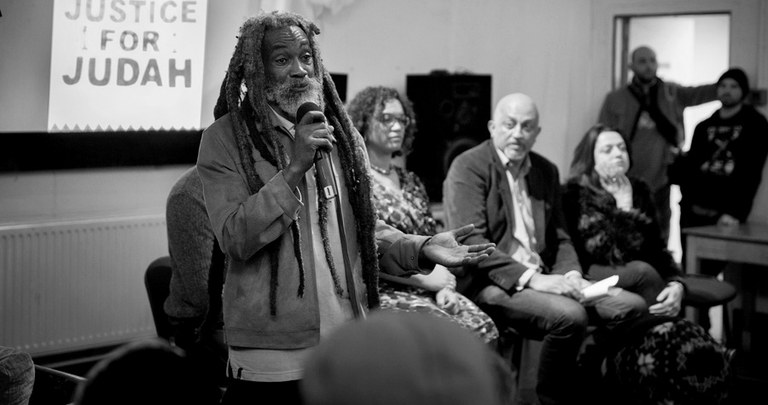
    <content:encoded xmlns:content="http://purl.org/rss/1.0/modules/content/"><![CDATA[<p class="BCX0 SCXW198613843 Paragraph"><img src="https://ldap2.3ca.org.uk/about/news/latest-news/Justice4Judah_19asMarkSimmons.jpg/@@images/57f2aa20-1409-48de-89f7-ea355ba2c19f.jpeg" alt="" class="image-inline" title="" /></p>
<p class="BCX0 SCXW198613843 Paragraph" style="text-align: right; "><i><span class="discreet">Justice4Judah campaign launch at the Kuumba Centre, 2017 ©MarkSimmons</span></i></p>
<p class="Paragraph SCXW198613843 BCX0"><span style="font-weight: bold; ">We Dream, They Rule: The Curious Case of Kuumba and the Call for Civic Change</span></p>
<blockquote class="pullquote"><span>"The relationship can’t be one of a parent and child that moves from the paternalistic to the parasitic, where we're ready to bur n it all to the ground when things go wrong. Instead, it needs to be symbiotic and reciprocal: a partnership where communities and institutions share responsibility, through both sunshine and rain." Anon</span></blockquote>
<p class="BCX0 SCXW198613843 Paragraph" style="text-align: left; ">This week, a civil ruling found in favour of the management committee of the St Pauls-based <a class="BCX0 SCXW198613843 Hyperlink" href="https://www.bristolpost.co.uk/news/bristol-news/trespassers-trustees-community-centre-wins-10440981" rel="noreferrer noopener" target="_blank">Kuumba Centre</a>, leaving the challenger and asset owners Bristol City Council red-faced and out of pocket.</p>
<p class="BCX0 SCXW198613843 Paragraph">The case highlights the complexities of managing community organisations and civic infrastructure. It sits against the national backdrop of We’re Right Here’s latest call to action: the Museum of Broken Dreams exhibition, which will bring to Parliament stories of community-led projects that could have transformed lives but were held back by bureaucracy and inflexible systems.</p>
<p class="BCX0 SCXW198613843 Paragraph">On the one hand, the judge’s decision to recognise the Kuumba committee as trustees can be seen as a win for the people; affirming the group’s legitimacy as those entrusted with the building’s guardianship. On the other, with that recognition comes the full weight of trustee-like duties, including accountability for how the site is managed and the consequences if it falls short. The ruling is both an important validation of community asset management and a reminder of the risks involved with safe and effective stewardship .</p>
<p class="BCX0 SCXW198613843 Paragraph">With councils across the UK unable and unwilling to manage buildings like these, it is left to volunteer groups who may lack the resources to deliver against expectations of communities and statutory bodies over time.</p>
<p class="BCX0 SCXW198613843 Paragraph">Accountability matters, but there is often a disconnect between what is expected vs what is realistic and achievable from all parties. Faced with perpetual scrutiny, community groups must work at pace to meet expectations around good governance, stable finances and impactful delivery, moving buckets to catch leaks, metaphorically and literally.</p>
<p class="BCX0 SCXW198613843 Paragraph">We all want well managed civic infrastructure that meets community needs and isn’t a burden on the public purse; the issue is how? How do we get what everyone wants? News flash. We can’t. Someone will always have to pay.</p>
<p class="BCX0 SCXW198613843 Paragraph"><strong>Councils pay.</strong> I am sure no one got into public service to take buildings off people. But with policies outdated, mechanisms slow, and processes inconsistent and overly bureaucratic, attempts to eliminate risk end up undermining the very community resilience we’d hope under-resourced administrations might want to support.</p>
<p class="BCX0 SCXW198613843 Paragraph">When funding is needed at the start of a project it’s rarely available. By the time things reach crisis point, funds are inevitably found and responses become heavy-handed, adversarial, and costly. Buildings sit in limbo and it’s not even clear who’s even responsible for figuring out what to do next. We always pay.</p>
<p class="BCX0 SCXW198613843 Paragraph"><strong>Communities pay.</strong> What starts out for most as a vision for something better. But anyone who has served on a community board knows that the realities are far more treacherous. From my earlier days in Bristol to some more recent experiences, the well-intentioned actions of those who want the best for their building can, over time, descend into disputes, factions and bitter rivalries.</p>
<p class="BCX0 SCXW198613843 Paragraph">Ineffective governance mechanisms chew up and spit out most, leaving spaces in the hands of a die-hard few who struggle under the cumulative effects of this way of working. Over time, this takes a toll: assets gradually decline, opportunities to make things better are missed and the goodwill that could’ve gone into building vibrant, thriving spaces is depleted. Nobody wins.  <br class="BCX0 SCXW198613843" /></p>
<p class="BCX0 SCXW198613843 Paragraph"><strong>And we pay. </strong>As we watch community leaders working tirelessly to keep buildings going, patching problems, navigating risk and jumping through hoops, we demand they do it backwards with high heels on. While councils struggle to balance budgets and meet statutory obligations, we shout, make FOI requests, caricature officers as the enemy, and treat capacity as an abstract concept rather than something finite and human.</p>
<p class="BCX0 SCXW198613843 Paragraph">The burden is on<i> them</i> surely, not<i> us</i>? We cry out for a fix as another building falls. We lament as problems that could have been solved with thousands escalate to millions. Our paternal government may dream up the latest national scheme funded by our taxes while we wait for it all to be put right by anyone by us. We walk past another boarded up space. Waiting. Wondering. In the end, we always pay.</p>
<p class="BCX0 SCXW198613843 Paragraph">As one trusted peer puts it, <i>"If we all pay in the end, then what’s our responsibility as communities? It’s not enough to be passive recipients. The relationship can’t be one of a parent and child that moves from the paternalistic to the parasitic, where we're ready to burn it all to the ground when things go wrong. Instead, it needs to be symbiotic and reciprocal: a partnership where communities and institutions share responsibility, through both sunshine and rain."</i></p>
<p class="BCX0 SCXW198613843 Paragraph">One size does not fit all. Every building, every neighbourhood, every group has its own story and reality. And because of that messy pluralism this means mistakes, failure, metamorphosis, rebirth. If the goal is to protect and sustain these vital spaces, we need a different approach. One rooted in partnership, trust and dialogue.</p>
<p class="BCX0 SCXW198613843 Paragraph">This isn’t just a Bristol issue. At its heart, it is about how we structure and what we expect from our public services: How do we find funds over time to sustain the long-term frameworks needed for communities to take on – and keep hold of – the land beneath our feet? How can we accept failure within that model, so that scrutiny needed today isn’t a barrier for anyone taking a chance on something akin to it tomorrow? Without wholesale change in both structure and expectations, every transfer is a sticking-plaster and any success in the now risks being a problem in the future as the world changes and we can’t keep up. In this, we are all vulnerable.</p>
<p class="BCX0 SCXW198613843 Paragraph">It’s time to stop upholding systems not designed with us in mind and instead commit to a new way of collaborative, forgiving, human centric thinking that allows our civic and cultural spaces to thrive.</p>
<p class="BCX0 SCXW198613843 Paragraph">This starts with us. All of us.</p>
<p class="BCX0 SCXW198613843 Paragraph"><i>This is an opinion piece by Emma Harvey, CEO</i></p>
<p class="callout"><strong>What you can do</strong></p>
<p class="callout"><strong>Locally</strong> Support Bristol’s <a href="https://ldap2.3ca.org.uk/about/news/latest-news/roots-of-resilience-report" class="BCX0 SCXW198613843 Hyperlink" rel="noreferrer noopener" target="_blank">Roots of Resilience </a>campaign - a network of Community Asset Organisations calling for a new framework: one that recognises the value of community assets not as liabilities on a balance sheet and places the council and communities as equitable partners in protecting our assets for the future. Write to your Councillor to ask them to support our recommendations.</p>
<p class="callout"><strong>Nationally</strong> Support We’re Right Here’s <a class="BCX0 SCXW198613843 Hyperlink" href="https://actionnetwork.org/letters/invite-your-mp-to-the-museum-of-broken-dreams/" rel="noreferrer noopener" target="_blank">Museum of Broken Dreams</a> campaign – they are asking you to write to your MP to invite them to an exhibition of community projects failed by bureaucracy and inflexible systems to coincide with the second reading of the English Devolution and Community Empowerment Bill. It is a last push for legislation that would shift power to local people and give communities the frameworks they need to take on and sustain vital assets.</p>]]></content:encoded>
    <dc:publisher>No publisher</dc:publisher>
    <dc:creator>&lt;object object at 0x7fd3e9440580&gt;</dc:creator>
    <dc:rights></dc:rights>
    
      <dc:subject>emma</dc:subject>
    
    <dc:date>2025-08-22T10:40:00Z</dc:date>
    <dc:type>News Item</dc:type>
  </item>


  <item rdf:about="https://ldap2.3ca.org.uk/about/news/latest-news/opinion-the-preservation-paradox-sell-now-pay-later">
    <title>Opinion: The preservation paradox: sell now, pay later</title>
    <link>https://ldap2.3ca.org.uk/about/news/latest-news/opinion-the-preservation-paradox-sell-now-pay-later</link>
    <description>CEO Emma Harvey reflects on the growing trend to sell off publicly owned assets </description>
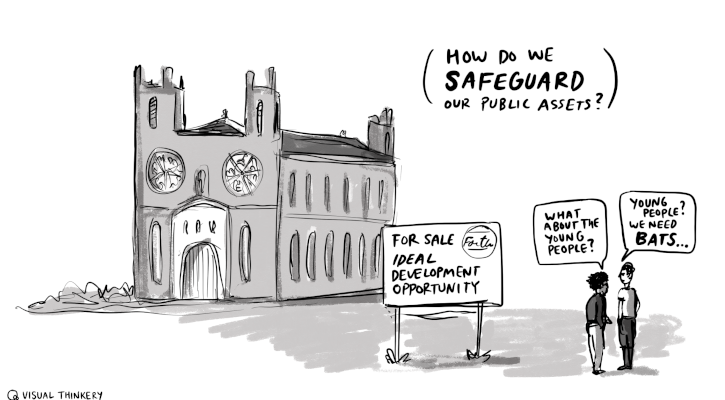
    <content:encoded xmlns:content="http://purl.org/rss/1.0/modules/content/"><![CDATA[<p><img src="https://ldap2.3ca.org.uk/about/news/latest-news/SafeguardourPublicAssets2.png" alt="Safeguard our assets" class="image-inline" title="Safeguard our assets" /></p>
<p><span class="discreet">Image credit: <a class="external-link" href="https://visualthinkery.com/">Visual Thinkery</a></span></p>
<p>This issue of our built environment and who shapes it is a local affair. Aside from exceptions such as the nefarious demolition of The Crooked House pub, campaigns rarely make national news. Headlines of collapsing schools, public sector strikes and unrelenting cost of living and housing crises can make preservation of our heritage and civic realm appear out of touch and NIMBYist.</p>
<blockquote class="pullquote">"Amidst the minefield of regulations, funding shortfalls, and bureaucratic complexities, the neglect of our shared spaces carries profound implications for generations to come. We must move beyond a meritocracy model and the need to balance our short-term fiscal needs to take a duty of care over the long-term reimagining of a shared civic canvas on which to build our collective future."  Emma Harvey</blockquote>
<p>Context is a cornerstone principle of the national planning framework, yet local authorities find the threat of an overturned decision and the resulting fines too risky at a time when 26 English councils risk of bankruptcy in the next two years<span class="discreet"> [^1^]</span>. Councils have powers to issue enforcement notices for urgent preservation or compulsory purchase of important, privately owned buildings. All too often though, it’s these same councils who are the reluctant custodians of our ageing social infrastructure.</p>
<p>We find ourselves trapped in an ongoing “estates rationalisation” exercise that deprives future generations of the shared spaces that shape the collective narratives of our communities. Research from the IPPR shows £15bn of publicly owned assets have been sold off since 2010. That’s 75,000 civic spaces, libraries, leisure centres, community halls and youth spaces lost. There <i>is </i>funding available to save them; £300 million DCMS Youth Investment Fund and £150 million DLUHC Community Ownership Fund. And yet it would appear only a fraction of these central government funds have been allocated.</p>
<p>These old, often listed, almost always complex buildings are in desperate need of investment after decades of cuts that have de-prioritised preventative preservation. This leaves such projects to save these spaces with an inherent messiness that is just to risky amidst continued rising costs of essential services. Such conditions make it almost impossible for all but a few fortuitous groups to lever funds to save the spaces we love.</p>
<p>While new laws have appeared to protect statues in the wake of the Colston statue's toppling, this protection seems to favour a type of politicised heritage storytelling, rather than building connections through our shared past. Our heritage spaces are being co-opted by those looking to control the narrative as exemplified by the recent case of the Restore Trust's bid to dominate the governance within the National Trust<span class="discreet"> [^2^]</span>. If those who control the present control the past and that past shapes our future, then the erosion of our stake and influence in shaping these narratives poses significant threat, especially if we continue to lose the spaces that allow us to make these stories our own.</p>
<p>The idea that we can only fix the roof whilst the sun is shining risks leaving us with no roofs at all under which to learn how to swim, to dance, to read, to make memories, connections and shared solutions to the problems facing us all. After a decade plus of political storms the ability to define heritage, own space and determine which assets should be preserved feels like a luxury. Distracted with the immediacy of our collective woes, the agendas of all but a few will define who we become.</p>
<p>Amidst the minefield of regulations, funding shortfalls, and bureaucratic complexities, the neglect of our shared spaces carries profound implications for generations to come. We must move beyond a meritocracy model and the need to balance our short-term fiscal needs to take a duty of care over the long-term reimagining of a shared civic canvas on which to build our collective future. Cost-saving solutions that fail to think beyond the current political cycle means we pay in perpetuity. Somewhere, in some form, <i>we</i> always pay.</p>
<p>Emma Harvey, CEO</p>
<p><strong>About this article</strong></p>
<p>Trinity are committed to advocating for shared community and cultural spaces. We are members of <a class="external-link" href="https://locality.org.uk/">Locality</a> and are currently leading an appeal to restore <a class="external-link" href="http://www.trinitybristol.org.uk/savejwb">Jacobs Wells Baths</a> in Hotwells.</p>
<p>Read our <a href="https://ldap2.3ca.org.uk/about/news/2021/100beacons" class="internal-link">100 Beacons</a> report that shines a light on the importance of – and understand the risks posed to – Bristol's community and cultural assets<strong>.</strong></p>
<p><span class="discreet">[^1^]: The Guardian: "<a href="https://www.theguardian.com/society/2023/aug/28/at-least-26-english-councils-at-risk-of-bankruptcy-in-next-two-years#:~:text=Local%20government-,At%20least%2026%20English%20councils%20'at%20risk,bankruptcy%20in%20next%20two%20years'&amp;text=At%20least%2026%20councils%20in,simply%20have">At least 26 English councils at risk of bankruptcy in next two years</a>"</span></p>
<p><span class="discreet">[^2^]: The Guardian: <a href="https://www.theguardian.com/commentisfree/2023/sep/24/vote-no-to-the-thinktank-pod-people-trying-to-body-snatch-the-national-trust">“Vote no to the thinktank pod people trying to body-snatch the National Trust<i>”</i></a></span></p>]]></content:encoded>
    <dc:publisher>No publisher</dc:publisher>
    <dc:creator>sarah</dc:creator>
    <dc:rights></dc:rights>
    
      <dc:subject>opinion</dc:subject>
    
    
      <dc:subject>jwb</dc:subject>
    
    
      <dc:subject>emma</dc:subject>
    
    
      <dc:subject>community</dc:subject>
    
    <dc:date>2023-10-09T13:30:00Z</dc:date>
    <dc:type>News Item</dc:type>
  </item>


  <item rdf:about="https://ldap2.3ca.org.uk/about/news/latest-news/money-matters">
    <title>Opinion: Money Matters</title>
    <link>https://ldap2.3ca.org.uk/about/news/latest-news/money-matters</link>
    <description>As Peter Holbrook, CEO of Social Enterprise UK, challenges the definition of the £428bn “impact economy”, our CEO Emma Harvey asks, what if we stopped counting?</description>
    <content:encoded xmlns:content="http://purl.org/rss/1.0/modules/content/"><![CDATA[<h3 class="mceContentBody documentContent"><img src="https://ldap2.3ca.org.uk/about/news/latest-news/DSC_5420.jpg/@@images/213205f3-240a-4ac2-b75e-6f1d06e9eeff.jpeg" alt="" class="image-inline" title="" /></h3>
<p class="mceContentBody documentContent" style="text-align: right; "><i><span class="discreet">Art is circus, not economic gymnastics - Image by Khali Ackford</span></i></p>
<p class="mceContentBody documentContent" style="text-align: left; "><i>As Peter Holbrook, CEO of Social Enterprise UK, challenges the definition of the £428bn “impact economy”, our CEO Emma Harvey asks, what if we stopped counting?</i></p>
<p class="mceContentBody documentContent" style="text-align: left; "><strong>Money Matters: Or why should we stop counting</strong></p>
<p class="mceContentBody documentContent">A quiet shift’s been happening towards the language of economic impact underpinning most conversations about the value of arts, culture and civic life. It’s about maths right so it’s important, or so we tell ourselves. Only, it doesn’t hold any value to us or our people. A kind of gymnastics, only it's all contortion without a rhythm or flow and leaves us feeling hollow. If you’ve found yourself sleepwalking into measuring legitimacy through this lens and wondered, how did we get here? you're not alone.</p>
<p class="BCX0 SCXW19348842 Paragraph">Profit isn’t a dirty word. Many charities are social enterprises in some form and should absolutely measure profitability. We know what makes a surplus and what that surplus has to carry. Whoever you are - and especially if you have less of it - financial literacy is survival. Money matters.</p>
<p class="BCX0 SCXW19348842 Paragraph">But it is also reductive. It flattens complex human work into numbers never designed to hold it. And we’ve seen what happens when this logic hardens. Take NEET contracts reengaging 16-18 year olds. Early on at Trinity we were able to make contacts like this work, to give intensive support to those young people whose needed it most. But over successive contract cycles, payment-by-results milestones became unattainable for smaller providers, shifting provision towards volume. Quietly, young people were sorted into those who were fixable and fundable and those too costly to help. If value’s only defined economically, what becomes of us unviables?</p>
<p class="BCX0 SCXW19348842 Paragraph">Economic impact does little to convert minds not already convinced. The economic case for culture has been made repeatedly by folk with far more letters after their names than me. We know about local economic multiplier effects and how vibrant cultural spaces animate high streets. When art makes a place thrive speculative investment often follows. That movement of money is all the proof you need.</p>
<p class="BCX0 SCXW19348842 Paragraph">Getting small organisations to count what doesn’t matter all that much to people distracts and detracts, pulling scarce energy towards chasing ghosts. Time is spent proving, calculating and modelling experiences into metrics to services decision-makers we may never meet. It shapes programmes around what can be counted rather than what is needed. Measurement isn’t neutral; it consumes time, attention and worst of all our spirit. And like any beast, we’ll never fully sate it.</p>
<p class="BCX0 SCXW19348842 Paragraph">Economic impact language blurs the boundary between profit and purpose. Peter Holbrook, chief executive of Social Enterprise UK, recently warned of this risk, with the £428bn “impact economy” defined in a way favouring investor-led models over ones built explicitly for public benefit. When everything is framed within the same metrics it’s a game we can’t win. It allows those primarily driven by profit to say, “Oh yes, we also care too”. And then carbon offsetting permits continued extraction and recycling bins in clothing stores capture our sense of doing good while production patterns remain unchanged. Language that - if we also adopt it - softens the edges of power structures to allow them to remain unchallenged.</p>
<p class="BCX0 SCXW19348842 Paragraph">Community organisations cannot outcompete on terrain designed for capital and conquest. Adopting this language without challenge collapses extraction and reinvestment, shareholder return and community accountability. The promise that continued growth will eventually lift everyone impact rests on a fading ideology and many communities have lived long enough through iterations of that promise to treat it with scepticism. That’s dangerous especially right now because it deepens disenfranchisement of those who already have lost trust and faith in decision-makers' intentions. Growth is happening just not for <i>you</i>. <i>You </i>don’t matter to us.</p>
<p class="BCX0 SCXW19348842 Paragraph">When we centre growth as proof of value we risk reinforcing the same scarcity logic that traps minds and builds conflict. Someone else out there is winning whilst I’m losing. We risk aligning ourselves with a world that many already experience as failing them. When growth doesn’t translate into feeling better off, people look sideways to see who is benefitting. And then we're in cookie cartoon territory, where the dude sits behind a plate piled high pointing at the one due opposite the other whilst saying, <i>He's taking what's yours.</i> It's data to stoke tension between those who feel they’re losing out because of a notion of a transaction happening elsewhere that’s making someone else better off. And as we're all butting heads, deeper extraction continues unchecked.</p>
<p class="BCX0 SCXW19348842 Paragraph">Money matters for most only in the direct transaction sense. Pay people to do the work that needs to be done as well as you can afford. Don’t ask artists to work for free. Pay young people for their time. Pay communities for their advice. Do not ask people to do more with less while citing economic impact. Don’t push the boulder up the hill by exploiting your team or yourself. If a claim made somewhere doesn’t translate to wages if folks’ pockets it’s a story that rings hollow. I can’t pay my bills with your data.</p>
<p class="BCX0 SCXW19348842 Paragraph">None of this means abandoning accountability to funders. We should measure what keeps us afloat and be transparent about our finances. When asked to show GVA, it might be worth asking what they’re looking to understand from those numbers, who needs to be assured and whether the absence of economic data lessens the legitimacy of the work. If their response is to scratch their heads and say they don't know and that someone further up the chain is asking, that might at least give us pause for thought. Provide the data and still ask the questions, because following instructions unquestioningly is how we uphold bureaucracies at the expense of ourselves until we all wind up doing more work for less meaning, trapped in a system that rewards compliance over change.</p>
<blockquote class="pullquote"><span class="discreet">There is no reason for thinking</span></blockquote>
<blockquote class="pullquote"><span class="discreet">That, if you give a chance for people to think or live</span></blockquote>
<blockquote class="pullquote"><span class="discreet">The arts of thought or life will suffer and become rougher</span></blockquote>
<blockquote class="pullquote"><span class="discreet">And not return more than you could ever give</span></blockquote>
<blockquote class="pullquote"><span class="discreet">Louis MacNeice, Autumn Journal (1939)</span></blockquote>
<blockquote class="pullquote"><span class="discreet">From Use or Ornament, Comedia’s report on the social value of the arts, 1997</span></blockquote>
<p class="BCX0 SCXW19348842 Paragraph">At Trinity, I cannot promise folk I’ll make them rich. What I hope we offer is a place for people to come to find connection and build meaning together. A place where stories are shared, mistakes are made and power is practised differently, even if it doesn’t always work out. People come at times at a crossroads in their lives and often move onto bigger and better things. Like that old slouchy jumper, you love it till you wear it right through. It’s a place where value is measured by knowledge, energy and commitment to making things as good as possible with what we have.</p>
<p class="BCX0 SCXW19348842 Paragraph">The only real arbiter of wealth is the money in my pocket. In what I can give that I don’t need paid back. In the time that it affords me to worry about it less and care about what gives me meaning more. <i>“What is it that breathes fire into the equations and makes a universe for them to describe?”</i> said Stephen Hawking. Is the arbiter of our worth counted by pounds and pence or the smile on our face at the end of the day and the energy we find to get up again tomorrow. In this world of the now that’s rich with data yet poor on trust, culture’s the fuel for growth, turbo charging connection, courage and conviction. Right now, that may be the more honest thing to count.</p>
<p class="BCX0 SCXW19348842 Paragraph"><span class="discreet"><i>This is an opinion piece by Emma Harvey, CEO</i></span></p>]]></content:encoded>
    <dc:publisher>No publisher</dc:publisher>
    <dc:creator>&lt;object object at 0x7fd3e9440580&gt;</dc:creator>
    <dc:rights></dc:rights>
    
      <dc:subject>emma</dc:subject>
    
    <dc:date>2026-02-24T09:35:00Z</dc:date>
    <dc:type>News Item</dc:type>
  </item>


  <item rdf:about="https://ldap2.3ca.org.uk/about/news/latest-news/migration-crimes">
    <title>Opinion: migration crimes</title>
    <link>https://ldap2.3ca.org.uk/about/news/latest-news/migration-crimes</link>
    <description>A reflection on today's tensions and if community cohesion models of the past might offer us a antidote</description>
    <content:encoded xmlns:content="http://purl.org/rss/1.0/modules/content/"><![CDATA[<p><iframe frameborder="0" height="400" src="https://www.youtube.com/embed/XbXo5t3WZoI?si=YAXS6cBfge5796BQ" title="YouTube video player" width="725"></iframe></p>
<p style="text-align: right; "><span style="font-family: lato_medium, lato_black, verdana, arial, helvetica, sans-serif; color: #666666; "><span style="font-size: 10.88px; background-color: rgb(255, 255, 255); ">2008 Dice Project, led by the wonderful community activist, Paulette North</span></span></p>
<blockquote class="pullquote"><span style="font-family: lato_medium, lato_black, verdana, arial, helvetica, sans-serif; color: #666666; "><span style="font-size: 10.88px; background-color: rgb(255, 255, 255); "> </span></span>“When people feel proud of where they live, trust grows. Community empowerment can be an antidote to riots, populism, and the void between people and politics.” Power to Change</blockquote>
<p>It’s been hard to miss rising tensions across the UK, including in Epping near my home town of Harlow. Speaking to <a href="https://news.sky.com/video/why-protesters-fight-asylum-hotels-13420261">Sky News</a>, some of those protesting said they feel afraid and want fairness. This is “a fight for survival,” one interviewee laments, though refugees and asylum seekers make up less than 2% of the UK population.</p>
<p align="left" class="western">A sleight of hand diverts attention from the real causes of health, housing and social mobility inequity, serving the interests of affluent, monocultural influencers who benefit from sustaining division. Musk live streams in with his hot take. Rylan’s already chimed in with his two-pence. Unpicking this will not be easy.</p>
<p align="left" class="western">We need only look to the US to see how there are forces that manipulate the strength of feeling of those <span style="letter-spacing: normal; "><span style="font-weight: normal; ">already feeling overlooked</span></span> for their own gain. Shame does little to counter and instead fuels a belief that we – the politicians, decision-makers, experts, liberal elite and ruling classes – do not care.</p>
<p align="left" class="western"><span style="letter-spacing: normal; "><span style="font-weight: normal; ">It’s easy to dismiss people as uneducated or ignorant as our gaze is drawn toward communities where asylum seekers are placed in hotels or dispersed without adequate care or support. </span></span>Challenges that echo Gordon Brown’s ‘Bigotgate’ drive those disenfranchised<span style="letter-spacing: normal; "><span style="font-weight: normal; "> </span></span><span style="letter-spacing: normal; "><span style="font-weight: normal; ">for generations further toward </span></span>those who affirm their views and stoke their fears – even where there is little to no promise of improvement to their current circumstances.</p>
<p align="left" class="western">“It looks quite pretty”, says my mum, about the St George’s flags that have popped up in and around my home town, missing how this symbol of belonging ‘others’. A shift reminiscent of a Buddhist symbol that once stood for good fortune and prosperity that has since become synonymous with oppression and hate. A reminder that our symbols, like our identities, are subjective, contextual and in constant flux; a negotiation between us and the rest of the world.</p>
<p align="left" class="western">As the Sky News interviewee tears up imagining their WWII fighting relative turning in their grave at the thought of the erosion of this once great nation, I read a WhatsApp from my sister; her friends in Epping describing anti-migration protesters as “awful,” and a summer of church services being cancelled because residents feel too fearful of those purportedly defending British values.</p>
<p align="left" class="western">We try to reason that, “migrants do the jobs we won’t”, meant as a defence and reinforcing a hierarchy where migrants are only welcome if they serve<i> us</i>. A statement offered by those distant from those working class communities who traditionally wiped the bums of this once great nation.</p>
<p align="left" class="western">We point to our individual and collective role in the climate crisis as a catalyst for global migration, as local volunteers are left to clear the rubbish scattered around hotels and fields after protesters from both sides have long gone home.</p>
<p align="left" class="western">We argue our country has caused wars and displacement as if this will resonate with those who have given up on voting a long time ago because, as my dad puts it, “they’re all as bad as each other”.</p>
<p align="left" class="western"><span style="letter-spacing: normal; "><span style="font-weight: normal; ">From wars to wages to the shape of our neighbourhoods, “you have to join a protest to try to get the government to listen to you”, is a statement shared across a political spectrum increasing devoid of nuance. </span></span><span style="letter-spacing: normal; "><span style="font-weight: normal; ">Voices speaking </span></span><span style="letter-spacing: normal; "><span style="font-weight: normal; ">of “protecting women and children” as they terrify that same demographic </span></span><span style="letter-spacing: normal; "><span style="font-weight: normal; ">who have no where else to go. Voices of </span></span><span style="letter-spacing: normal; "><span style="font-weight: normal; ">those labelling anyone anxious about what change outside their control means for them as “far right”. Voices leading the charge on either side framing themselves as either safeguarding from invaders or resisting Nazi scum, </span></span><span style="letter-spacing: normal; "><span style="font-weight: normal; ">emboldening others to join them.</span></span></p>
<p align="left" class="western"><span style="letter-spacing: normal; "><span style="font-weight: normal; ">If</span></span><span><span> we expect people to care about our complicity in wars, climate change and other global crises driving migration we cannot keep debating in the abstract or from opposite sides of the picket line. We must neither underestimate the unfair burden on those most harmed by prejudice, nor the power we hand to bad actors when we dismiss the concerns of whose energies right now are misapplied.</span></span></p>
<p align="left" class="western"><span><span> </span></span><span><span><span>To</span><span> realise something better, </span>we have to </span></span><span><span>find unharmful ways to connect and amplify the voices that matter most – both those migrating to the UK to contribute to our economy or seek refuge and the communities they join. We must make space to sit down, talk openly and be honest if we want a solution that sticks. With the English Devolution and Community Empowerment Bill moving forward through Parliament - the first time the word ‘empowerment’ has ever appeared in the title of a bill - the hope is increasing rights of communities to shape their neighbourhoods may just be the antidote to this social fragmentation.</span></span></p>
<p align="left" class="western"><span style="letter-spacing: normal; ">“</span><span style="letter-spacing: normal; "><span style="font-weight: normal; ">O</span></span><span style="letter-spacing: normal; "><span style="font-weight: normal; ">nce called ‘cohesion,’ revisiting it could be exactly what we need!”, I thought, as I reminisced one of my first projects at Trinity, </span></span><span style="letter-spacing: normal; "><span style="font-weight: normal; ">t</span></span>he ‘<a href="https://youtu.be/XbXo5t3WZoI?si=zFxV8CJ8w_hpj4HB">Dice Project</a>’<span style="letter-spacing: normal; "><span style="font-weight: normal; "> with Bristol’s City Academy. It brought together older people and children from refugee and asylum communities during a time of growing </span></span><span style="letter-spacing: normal; "><span style="font-weight: normal; ">local t</span></span><span style="letter-spacing: normal; "><span style="font-weight: normal; ">ensions.</span></span> Watching the film of it back, I’m not gonna pretend it changed the world.</p>
<p align="left" class="western">But without efforts like it, we can’t be surprised by the results we’re now seeing across UK communities of today who are being left to figure it out for themselves. <span style="letter-spacing: normal; "><span style="font-weight: normal; ">“I was surprised at the pictures the children drew around the wall. It just opened my eyes again to not judging”, said one older participant from a</span></span> project that no longer exists, that was funded by a fund that no longer exists and filmed for a community TV channel that no longer exists.</p>
<p align="left" class="western"><span style="letter-spacing: normal; "><span style="font-weight: normal; ">One interaction, one conversation, may not fix all our problems. But, over time, many interactions and continued conversations might just help to soften our edges. “Now we can respect to all people [sic]. No ‘younger people is good, older people is bad’. All people is nice. We must try and be friendly,” said one of the younger project members, who will by now be adulting in a society where we call for consent in our online spaces and bypass it when shaping the streets we live on.</span></span></p>
<p align="left" class="western"><span style="letter-spacing: normal; "><span style="font-weight: normal; ">This film about a long-forgotten project plays in a country in which our differences are gamified in a deliberate move by those who stand to profit politically from </span></span><span style="letter-spacing: normal; "><span style="font-weight: normal; ">those</span></span><span style="letter-spacing: normal; "><span style="font-weight: normal; "> with beef misdirected, countered by those leading the charge for Community Empowerment with </span></span><span style="letter-spacing: normal; "><span style="font-weight: normal; ">punitive</span></span><span style="letter-spacing: normal; "><span style="font-weight: normal; "> measures against migrants in a bid to nullify hostility, </span></span><span style="letter-spacing: normal; "><span style="font-weight: normal; ">feeding the narrative that </span></span><span style="letter-spacing: normal; "><span style="font-weight: normal; ">migration is </span></span><span style="letter-spacing: normal; "><i><span style="font-weight: normal; ">the </span></i></span><span style="letter-spacing: normal; "><span>problem. I<strong>n a world where we focus resources and efforts on the big issues from defence and health to the environment, while leaving the social fabric needed to deliver </strong></span></span><strong><span style="letter-spacing: normal; "><span>real and lasting</span></span><span style="letter-spacing: normal; "><span> solutions for our communities to chance. This is perhaps the greatest of all our migration crimes. </span></span></strong></p>
<p align="left" class="western"><span style="letter-spacing: normal; "><span style="font-weight: normal; ">As I reach the end of that film of a cohesion project from almost 20 years ago, tying to find </span></span><span style="letter-spacing: normal; "><i><span style="font-weight: normal; ">something </span></i></span><span style="letter-spacing: normal; "><span style="font-weight: normal; ">to help us here in the now, one young voice shares a final thought; “‘I’ve learnt that not all Elders are boring”.</span></span></p>
<p align="left" class="western"><span style="letter-spacing: normal; "><span style="font-weight: normal; ">It’s not much. But it’s a start.</span></span></p>
<p align="left" class="western"><span style="letter-spacing: normal; "><span style="font-weight: normal; "><i>This is an opinion piece by Emma Harvey, CEO</i></span></span></p>
<p align="left" class="western"><span class="discreet"> Interested in finding out more about the English Devolution and Community Empowerment Bill? Click here to read this <a href="https://lnkd.in/enbWqiqW">New Statesman</a> article featuring Josh Westerling from Power to Change and Sacha Bedding from the We’re Right Here campaign.</span></p>]]></content:encoded>
    <dc:publisher>No publisher</dc:publisher>
    <dc:creator>&lt;object object at 0x7fd3e9440580&gt;</dc:creator>
    <dc:rights></dc:rights>
    
      <dc:subject>emma</dc:subject>
    
    <dc:date>2025-09-14T06:55:00Z</dc:date>
    <dc:type>News Item</dc:type>
  </item>


  <item rdf:about="https://ldap2.3ca.org.uk/about/news/latest-news/a-different-way-of-being">
    <title>Opinion: It's time to curate a different way of being</title>
    <link>https://ldap2.3ca.org.uk/about/news/latest-news/a-different-way-of-being</link>
    <description>Opinion piece by CEO, Emma Harvey</description>
    <content:encoded xmlns:content="http://purl.org/rss/1.0/modules/content/"><![CDATA[<p><img src="https://ldap2.3ca.org.uk/about/news/DSC_0238.JPG/@@images/1d42f00e-0863-4794-a9d7-1ed5549e8f8c.jpeg" alt="" class="image-inline" title="" /></p>
<p>At Trinity, families from across our surrounding neighbourhoods come together. Children create paintings reflecting their diverse heritages. They sing nursery rhymes in different languages. The UK I see each day is not the divided one that manifested this weekend. It’s a place where people connect and foster relationships, bridging our diverse pasts within our shared present.</p>
<p>To suggest multiculturalism is something we tried and can simply undo is a particular form of dishonesty. Whether you like it or not, our towns and cities will only become more diverse so we must find ways to rub up against each other in less painful ways.</p>
<p>Multiculturalism isn’t a problem, but it’s also not a Benetton ad. Trinity’s charitable purpose is to promote racial harmony by encouraging equality of opportunity and good relations between people of different racial and cultural identities, and by facilitating multicultural activities. This isn’t just because it’s great fun, but because cohesion isn’t incidental. It requires work, spaces and resources, which are in short supply as counties, councils and communities go broke.</p>
<p>As the world changes around us in quicker and bolder ways, demographic profiles will continue to shift. Connecting online or in spaces with those who only nod in agreement makes seeing the world through a different lens all the harder.</p>
<p>Anchor hubs, community halls, neighbourhood pubs, historical sites and cultural institutions can offer an antidote; providing a familiar backdrop for existing communities while welcoming new ones. But rapid redevelopment, rising costs and pressures on sustaining statutory services are placing pressures on councils – often the legacy owners of a portfolio of our civic, cultural and heritage assets – to sell off the spaces that underpin our social fabric. Meanwhile, the decline of high streets has slowed growth and depleted local offerings that were once the foundation of an area’s cultural identity. If we no longer have places to drink tea and eat biscuits together, this creates a feeling of loss and defensiveness of 'us' that compounds fears of 'them'.</p>
<p>The sleight of hand being played is, while attention is diverted to small boats, the real threat – unregulated speculative land investment and inadequate community land control – continues to rob us of what’s ours. The response is a growing movement of local and national networks battling to save our spaces. While there are success stories, many of these campaigns struggle due to a lack of resources, experience and long-term support. Cash talks meaning it can be difficult to compete against the pressure on local authorities to dispose of assets at a commercial rate to balance budgets. Unlocking decisions and funding to protect these assets often hinges on political cycles, party policies and slogans that feel beyond our influence. This means, for every success story, we’re still losing more than we’re saving.</p>
<p>If we want to make things better for everyone, we must find a way to value societal well-being and sustainable development as much as, if not more than, the economic value of the ground under our feet. We can call in the army, increase police resources and regulate online spaces. But, if we want to see less of what happened this weekend, we must engage in the national conversation about the systemic issues behind such events and address how we provide vital civic infrastructure for a population that will only continue to grow in density and diversity.</p>
<p>The decisions we make now shape the story we tell about ourselves to future generations. At Trinity, we push the boundaries of a building constructed by people who could never have imagined the ways we use the space today. This space, built without us in mind, requires us to find ways to resource it for the future while accepting that we can’t predict what tomorrow holds or control who gets to be part of that.</p>
<p>Communities, times and places change. Once disparate cultural threads intertwine, shaping the ancestors we become. The fringe becomes the ordinary, the dinosaur, the dust.  In a world of polarisation, fear, and uncertainty, these are the spaces (as our Edson says) that allow us to curate a different way of being, resonating with our shared past and shaping a more resilient and culturally vibrant future.</p>
<p>Right now, these spaces are more vital than ever.</p>
<p>#RadicalInclusion</p>
<p><i><span class="discreet">This is an opinion piece by Emma Harvey</span></i></p>]]></content:encoded>
    <dc:publisher>No publisher</dc:publisher>
    <dc:creator>&lt;object object at 0x7fd3e9440580&gt;</dc:creator>
    <dc:rights></dc:rights>
    
      <dc:subject>opinion</dc:subject>
    
    
      <dc:subject>emma</dc:subject>
    
    <dc:date>2024-08-05T07:45:00Z</dc:date>
    <dc:type>News Item</dc:type>
  </item>


  <item rdf:about="https://ldap2.3ca.org.uk/about/news/latest-news/opinion-holding-onto-our-roofs">
    <title>Opinion: Holding Onto Our Roofs When The Sun Ain’t Shining </title>
    <link>https://ldap2.3ca.org.uk/about/news/latest-news/opinion-holding-onto-our-roofs</link>
    <description>CEO Emma Harvey asks: In austere times, how do we retain and maintain community buildings?</description>
    <content:encoded xmlns:content="http://purl.org/rss/1.0/modules/content/"><![CDATA[<p><img src="https://ldap2.3ca.org.uk/about/news/latest-news/roofsnewsmain.JPG" alt="" class="image-inline" title="" /></p>
<p><span class="discreet">Jacobs Wells Baths - Image Credit: Sam Prosser</span></p>
<p>Preserving and maintaining community spaces is proving increasingly difficult as local authorities grapple with continued budgetary pressures. Some local authorities are facing or have already issued <a class="external-link" href="https://www.instituteforgovernment.org.uk/explainer/local-authority-section-114-notices">Section 114</a><a class="external-link" href="https://www.instituteforgovernment.org.uk/explainer/local-authority-section-114-notices"> notices</a> – which means expected income isn’t enough to cover expenditure. In response, <a class="external-link" href="https://consult.levellingup.gov.uk/local-government-finance/17f61919/">the Government</a> is considering making it easier for councils to dispose of publicly owned assets to cover rising costs of essential services. Financial news provider, <a class="external-link" href="https://www.bloomberg.com/news/articles/2024-01-06/uk-may-relax-rules-on-council-asset-sales-to-avert-bankruptcies">Bloomberg</a>, sets out how, “The move would mark a sharp relaxation of the current constraints, which prevent councils from using money from asset sales to meet budget pressures from day-to-day services without approval from the central government.”</p>
<blockquote class="pullquote">"The choices we make now in response to the challenge of preserving civic and cultural infrastructure in the face of financial uncertainty is a decision that will have lasting consequences for future generations" Emma Harvey</blockquote>
<p>Community groups and charities are collaborating to devise shared solutions to protect civic and cultural assets from disposal and loss; from volunteering to manage local allotments and raising money to invest in parks and play areas, to taking on ownership of local pubs or community buildings and developing their own <a class="external-link" href="https://www.gov.uk/guidance/neighbourhood-planning--2">Neighbourhood Plans</a>.</p>
<p>Whilst there are individual success stories of spaces saved, the challenge lies in how we create a national community asset transfer approach that is replicable, scalable and sustainable. As Brendan Conway, a leading voice in community assets, sets out in a LinkedIn post at the start of the year; “we must not valorise small precedents that have hidden foundations and assume that they are replicable.”</p>
<p>The current model places communities under increasing pressure to do more, though they may not equally hold all the necessary resources to convert short-term passion into sustained success. Existing funding schemes tied to short-term political cycles overlook the complexities of such projects, which require a variety of factors to align. Passionate people who care will inevitably overcommit and inexperienced individuals will underestimate what’s necessary to sustain a recovery effort over time. Some communities may hold the aspiration, but struggle to channel the right energy, investment or efforts consistently and continually. Others may just be overwhelmed, fatigued, or disheartened from past failed efforts to save the things they’ve loved and lost. This could lead to an increasingly disproportionate distribution of social resources, unless we proactively lay the foundations required to enhance success rates equitably across the breadth of UK communities.</p>
<p>The solution as to how we preserve civic and cultural infrastructure amidst financial uncertainty requires a nuanced, adaptable and holistic approach. It’s a delicate balancing act that, if we fail to get right, will leave our communities of tomorrow without the infrastructure they need to allow our more diverse, more densely populated neighbourhoods to function. The more we embark on these ambitious, quirky, complex projects, the more we will see projects fail. Should sites revert back to local authority control at a point where resources and capacity has further depleted, this will only compound risk of future asset disposal, not least because now one might also point to how the community tried, but failed to make it work.</p>
<p>In Bristol, there are a number of organisations driving a community ownership movement and a more strategic approach to community asset management, such as Bristol’s Community Anchor Network who have launched a manifesto to ask for more targeted support and investment to protect the city’s social fabric. More widely, <a class="external-link" href="https://www.newlocal.org.uk/articles/how-we-did-it-unlocking-community-assets-through-local-partnerships/">Platform Places</a> are collaborating with councils, community asset managers and owners to repurpose vacant high street properties, whilst Locality are continuing to promote their #SaveOurSpaces campaign by launching a new “community power revolution” to place more power in the hands of communities.</p>
<p>The choices we make now in response to the challenge of preserving civic and cultural infrastructure in the face of financial uncertainty is a decision that will have lasting consequences for future generations. To ensure a resilient and culturally vibrant future for UK communities expanding in diversity and population density, we must adopt a nuanced, bespoke and holistic approach to the assets that underpin our daily lives; one that embraces all the complexities, personalities and idiosyncrasies of our changing social and cultural landscape. And we need to do that pretty soon, before we have no space left to fight for.</p>
<p>Emma Harvey, CEO Trinity Community Arts</p>
<p>#SoldFromUnderYou</p>
<p>#SaveOurSpaces</p>
<p><strong>About this article</strong></p>
<ul>
<li>Trinity are committed to advocating for shared community and cultural spaces. We are members of <a class="external-link" href="https://locality.org.uk/">Locality</a> and are currently leading an appeal to restore <a class="external-link" href="http://www.trinitybristol.org.uk/savejwb">Jacobs Wells Baths</a> in Hotwells.</li>
<li>Read our <a href="https://ldap2.3ca.org.uk/about/news/2021/100beacons" class="internal-link">100 Beacons</a> report that shines a light on the importance of – and understand the risks posed to – Bristol's community and cultural assets<strong>.</strong></li>
<li>Read opinion piece <a href="https://ldap2.3ca.org.uk/about/news/latest-news/opinion-the-preservation-paradox-sell-now-pay-later" class="internal-link">"The preservation paradox: sell now, pay later"</a> </li>
</ul>]]></content:encoded>
    <dc:publisher>No publisher</dc:publisher>
    <dc:creator>&lt;object object at 0x7fd3e9440580&gt;</dc:creator>
    <dc:rights></dc:rights>
    
      <dc:subject>opinion</dc:subject>
    
    
      <dc:subject>emma</dc:subject>
    
    
      <dc:subject>community</dc:subject>
    
    <dc:date>2024-02-21T16:30:00Z</dc:date>
    <dc:type>News Item</dc:type>
  </item>


  <item rdf:about="https://ldap2.3ca.org.uk/about/news/latest-news/bristol-arts-funding">
    <title>Opinion: Bristol Arts Funding</title>
    <link>https://ldap2.3ca.org.uk/about/news/latest-news/bristol-arts-funding</link>
    <description>Our CEO has written an opinion piece on the challenges facing Bristol arts in the context of the wider cuts to arts funding and the impact this has on limiting pathways into careers in the creative industries</description>
    <content:encoded xmlns:content="http://purl.org/rss/1.0/modules/content/"><![CDATA[<p align="left" class="western"><img src="https://ldap2.3ca.org.uk/activities/art-of-resistance/news/copy_of__A5A2882.jpg" alt="Tide and Tales " class="image-inline" title="Tide and Tales " /></p>
<p align="left" class="western"><span class="discreet">Tide and Tales perform during Summer Stay and Play sessions. Photo credit: Alistair Brookes</span></p>
<p align="left" class="western"><strong>Trinity CEO, Emma Harvey, reflects on the challenges facing Bristol arts in the context of the wider cuts to arts funding and the impact this has on limiting pathways into careers in the creative industries.</strong></p>
<p align="left" class="western"><span>In December 2023, Bristol City Council </span><span>(BCC) </span><span>announced </span><span>the</span><span>ir decisions fo</span><span>r the Cultural Investment Programme, </span><span>awarding</span><span> </span><span>grants</span><span> in principle to 15 organi</span><span>s</span><span>ations. </span><span>This included</span><span> Trinity, </span><span>newly funded </span><span>Unique Voice, </span><span>and T</span><span>ravelling Light Theatre Company </span><span>who recently lost their regular funding from Arts Council England. </span><span>Also Acta, ASLS, Asian Arts Agency, Bristol Pride, Circomedia, </span><span>CYN,</span><span> KWMC, Paraorchestra, Rising Arts Agency, Spike Island, St Paul’s Carnival and the Tobacco Factory.</span></p>
<p align="left" class="western"><span style="font-weight: normal; ">With nearly a 40% reduction</span><span style="font-weight: normal; "> in total funds </span><span style="font-weight: normal; ">compared to p</span><span style="font-weight: normal; ">ast</span><span style="font-weight: normal; "> rounds</span><span style="font-weight: normal; ">, 13 groups missed out on regular investment. This included </span><span style="font-weight: normal; ">previously funded groups</span><span style="font-weight: normal; "> Bristol Old Vic, Encounters, Exchange, IBT, MAYK, RWA, Saffron, St Georges, Trigger and Watershed, alongside new proposals from APE, SSGB and Wardrobe Theatre.</span></p>
<blockquote class="pullquote"><span style="font-weight: normal; ">"Rather than sharpening our elbows to fight for the crumbs that fall from the table we should be Oliver Twisting it up and asking for more."</span></blockquote>
<p align="left" class="western"><span style="font-weight: normal; ">As testament to the sector’s precariousness, two</span><span style="font-weight: normal; "> long-standing arts organisations </span><span style="font-weight: normal; ">were listed as, </span><span style="font-weight: normal; ">“closed or closing so not considered for investment”. Those not </span><span style="font-weight: normal; ">selected</span><span style="font-weight: normal; "> </span><span style="font-weight: normal; ">have </span><span style="font-weight: normal; ">responded with concerns about the continued cost o</span><span style="font-weight: normal; ">f living </span><span style="font-weight: normal; ">crisis </span><span style="font-weight: normal; ">reducing</span><span style="font-weight: normal; "> audience revenue </span><span style="font-weight: normal; ">a</span><span style="font-weight: normal; ">longside r</span><span style="font-weight: normal; ">ising overheads </span><span style="font-weight: normal; ">placing pressures on finances</span><span style="font-weight: normal; ">. </span><span style="font-weight: normal; ">Cultural i</span><span style="font-weight: normal; ">nstitutions t</span><span style="font-weight: normal; ">raditionally seen as too big to fail </span><span style="font-weight: normal; ">are facing an uncertain future </span><span style="font-weight: normal; ">and all funding</span><span style="font-weight: normal; "> </span><span style="font-weight: normal; ">is </span><span style="font-weight: normal; ">still subject to annual approva</span><span style="font-weight: normal; ">l. </span><span style="font-weight: normal; ">This co</span><span style="font-weight: normal; ">ntinued uncertainty </span><span style="font-weight: normal; ">means</span><span style="font-weight: normal; "> we're all on </span><span style="font-weight: normal; ">a sinking ship, just at different points of an inescapable decline.</span></p>
<p align="left" class="western"><span style="font-weight: normal; ">S</span><span style="font-weight: normal; ">uccesses and setbacks </span><span style="font-weight: normal; ">are all part of business as usual at Trinity. After almost 20 years the best I can say when someone asks if we'll be here in twelve months is, "hopefully". In the voluntary sector, survival is as good as it gets. Hearing frequent ‘Nos' then trying to work out what's next is part of the job.</span><span style="font-weight: normal; "> Competitive funding rounds linked to political cycles are perhaps the worst at</span><span style="font-weight: normal; "> </span><span style="font-weight: normal; ">breeding a "them and us" mindset, making</span><span style="font-weight: normal; "> </span><span style="font-weight: normal; ">organisations old and new, big and small go up </span><span style="font-weight: normal; ">against one another </span><span style="font-weight: normal; ">for ever decreasing </span><span style="font-weight: normal; ">funds</span><span style="font-weight: normal; ">. </span><span style="font-weight: normal; ">It</span><span style="font-weight: normal; "> creates a short-term focus and leads to over-commitment, particularly from those </span><span style="font-weight: normal; ">smaller, newer groups</span><span style="font-weight: normal; "> desperate to move from being “out” to “in” any </span><span style="font-weight: normal; ">funding </span><span style="font-weight: normal; ">portfolio </span><span style="font-weight: normal; ">round. It</span><span style="font-weight: normal; "> leads to an</span><span style="font-weight: normal; "> unrealistic</span><span style="font-weight: normal; "> emphasis on measuring </span><span style="font-weight: normal; ">the intangible that benefits no one and </span><span style="font-weight: normal; ">decreases our appetite for risk, stifl</span><span style="font-weight: normal; ">ing</span><span style="font-weight: normal; "> the very creativity we’re seeking to support.</span></p>
<p align="left" class="western"><span style="font-weight: normal; ">Rather than sharpening our elbows to fight for the crumbs that fall from the table we should be Oliver Twisting it up and asking for more. Were </span><span style="font-weight: normal; ">BCC to fund all 30 organisations listed to the max</span><span style="font-weight: normal; ">imum </span><span style="font-weight: normal; ">annual grant amount of £30k per year, this would amount to the amount to less 2% of </span><span style="font-weight: normal; ">the city’s </span><span style="font-weight: normal; ">total annual revenue spend.</span><span style="font-weight: normal; "> </span><span style="font-weight: normal; ">With many administrations </span><span style="font-weight: normal; ">nationally</span><span style="font-weight: normal; "> issuing or on the verge of section 114 notices due to difficulties in delivering balanced budgets, this can make </span><span style="font-weight: normal; ">such a </span><span style="font-weight: normal; ">case for</span><span style="font-weight: normal; "> </span><span style="font-weight: normal; ">arts funding appear entitled and out of touch with the everyday suffering of many </span><span style="font-weight: normal; ">across the country. But cuts to arts funding are part of a wider narrative (see links, below) of reduced investment </span><span style="font-weight: normal; ">in the</span><span style="font-weight: normal; "> arts that deprives those without the means from carving out meaningful experiences and careers in the creative industries.</span></p>
<p align="left" class="western"><span style="font-weight: normal; ">Arts can be an easy thing to cut in difficult times but we’re doing so to the detriment of those who benefit from its power most. There is an intrinsic value </span><span style="font-weight: normal; ">that’s </span><span style="font-weight: normal; ">accepted </span><span style="font-weight: normal; ">and </span><span style="font-weight: normal; ">widely </span><span style="font-weight: normal; ">evidenced. Art is</span><span style="font-weight: normal; "> good for us; our economy, our health, our </span><span style="font-weight: normal; ">sense of place and belonging. </span><span style="font-weight: normal; ">And</span><span style="font-weight: normal; "> yet, one of the wealthiest city's in one of the wealthiest countries globally can’t even resource the creativity that sits at the heart of our </span><span style="font-weight: normal; ">local </span><span style="font-weight: normal; ">identity.</span></p>
<p align="left" class="western"><span style="font-weight: normal; ">Collaborating with<a href="https://ldap2.3ca.org.uk/about/news/latest-news/nature-play" class="internal-link"> three local primary schools</a>, </span><span style="font-weight: normal; ">Trinity </span><span style="font-weight: normal; ">recognise</span><span style="font-weight: normal; ">s</span><span style="font-weight: normal; "> the significance of early engagement with culture in igniting creative aspirations. Children locally and nationally have witnessed </span><span style="font-weight: normal; ">reduced access</span><span style="font-weight: normal; "> to arts education compounded by challenges stemming from the pandemic and the ongoing burden of </span><span style="font-weight: normal; ">cost of </span><span style="font-weight: normal; ">living </span><span style="font-weight: normal; ">limiting access to </span><span style="font-weight: normal; ">out of school activities. </span></p>
<p align="left" class="western"><span style="font-weight: normal; ">The ongoing decline in arts investment nationwide results in a gradual erosion of our opportunities to engage with the arts, </span><span style="font-weight: normal; ">limiting </span><span style="font-weight: normal; ">our cultural pathways. As the voices shaping our shared narratives become fewer, the story of our national identity risks being conveyed through an ever narrowing lens. Over time, this reduces the chances for individuals without existing wealth and means to pursue meaningful careers in an industry that contributes billions to the UK's economy annually.</span></p>
<p align="left" class="western"><span style="font-weight: normal; ">It is commendable that, for the time being at least, BCC have sought to protect what remains of their public subsidy for the sector and focus what resource it can with the aim of sustaining </span><span style="font-weight: normal; ">participatory arts provision within</span><span style="font-weight: normal; "> neighbourhoods</span><span style="font-weight: normal; ">. But if we really want to ensure everyone has the opportunity to access and make art we need to think </span><span style="font-weight: normal; ">of better </span><span style="font-weight: normal; ">ways to ensure the investment is felt beyond a handful of suspects, however usual or unusual. </span></p>
<p align="left" class="western"><span style="font-weight: normal; ">Some of the most successful schemes to support arts and diversify the </span><span style="font-weight: normal; ">arts </span><span style="font-weight: normal; ">sector have come from creative co-option of back-to-work schemes, from Future Jobs Fund and the recent <a href="https://ldap2.3ca.org.uk/about/news/latest-news/access-to-the-arts-industry-with-trinity" class="external-link">Kickstart Scheme</a>, </span><span style="font-weight: normal; ">providing</span><span style="font-weight: normal; "> paid entry level roles for &lt;25s, </span><span style="font-weight: normal; ">t</span><span style="font-weight: normal; ">o Thatcher’s</span><span style="font-weight: normal; "><a href="https://www.theguardian.com/culture/2023/jul/26/thatcher-enterprise-allowance-scheme-artists-rachel-whiteread-jarvis-cocker-britpop-ybas"> Enterprise Allowance</a>, </span><span style="font-weight: normal; ">which enabled</span><span style="font-weight: normal; "> some of the UK’s most prolific cultural practitioners </span><span style="font-weight: normal; ">to carve out their early careers and saw the birth of</span><span style="font-weight: normal; "> Brit Art movement.</span></p>
<p align="left" class="western"><span style="font-weight: normal; ">Some trusts and foundations are catching on and supporting organisations and creatives in new and flexible ways. As far as public subsidy goes, we’re fighting for a </span><span style="font-weight: normal; ">seat at a table where chairs are </span><span style="font-weight: normal; ">continually being taken out of the game. W</span><span style="font-weight: normal; ">ho will secure the chair once the music stops? </span><span style="font-weight: normal; ">A </span><span style="font-weight: normal; ">more impactful path involves collaborative efforts to </span><span style="font-weight: normal; ">lay the</span><span style="font-weight: normal; "> foundation</span><span style="font-weight: normal; ">s</span><span style="font-weight: normal; "> for fair</span><span style="font-weight: normal; ">er</span><span style="font-weight: normal; "> resource distribution. </span><span style="font-weight: normal; ">Let’s stop playing someone else’s game and tip the</span><span style="font-weight: normal; "> table over.</span></p>
<p align="left" class="western"><span style="font-weight: normal; "><i>By Emma Harvey, CEO</i></span></p>
<p align="left" class="western"><strong>Further reading:</strong></p>
<p align="left" class="western">Bristol City Council defends cultural venue funding cuts (<a href="https://www.bbc.co.uk/news/uk-england-bristol-67646524">BBC</a>)</p>
<p align="left" class="western">Restore Bristol arts funding! (<a href="https://www.megaphone.org.uk/petitions/mayor-marvin-rees-restore-our-arts-funding">Equity</a>)</p>
<p align="left" class="western">The arts are in crisis (<a href="https://gal-dem.com/arts-sector-cuts">Gal Dem</a>)</p>
<p align="left" class="western">Government urged to intervene over local arts cuts (<a href="https://www.campaignforthearts.org/coverage/emergency-action-needed-government-urged-to-intervene-over-local-arts-cuts/">Campaign For The Arts</a>)</p>
<p align="left" class="western" style="line-height: 115%; ">Funding cuts and weak economy send UK’s visual arts into crisis (<a href="https://www.theartnewspaper.com/2023/07/11/special-report-funding-cuts-and-weak-economy-send-uks-visual-arts-into-crisis">The Art Newspaper</a>)</p>
<p align="left" class="western" style="line-height: 115%; ">How will art funding cuts in schools affect creativity? (<a href="https://www.itsnicethat.com/features/how-will-art-funding-cuts-in-schools-affect-creativity-thematic-creative-industry-politics-170423">It’s Nice That</a>)</p>
<p align="left" class="western" style="line-height: 115%; ">Huge decline of working class people in the arts reflects fall in wider society (<a href="https://www.theguardian.com/culture/2022/dec/10/huge-decline-working-class-people-arts-reflects-society">Guardian</a>)</p>]]></content:encoded>
    <dc:publisher>No publisher</dc:publisher>
    <dc:creator>&lt;object object at 0x7fd3e9440580&gt;</dc:creator>
    <dc:rights></dc:rights>
    
      <dc:subject>opinion</dc:subject>
    
    
      <dc:subject>trinity presents</dc:subject>
    
    
      <dc:subject>emma</dc:subject>
    
    
      <dc:subject>trinity</dc:subject>
    
    <dc:date>2023-12-12T11:05:00Z</dc:date>
    <dc:type>News Item</dc:type>
  </item>


  <item rdf:about="https://ldap2.3ca.org.uk/activities/jacobs-wells/news/let-there-be-light">
    <title>Let There Be Light!</title>
    <link>https://ldap2.3ca.org.uk/activities/jacobs-wells/news/let-there-be-light</link>
    <description>If you’ve walked past Jacobs Wells Baths recently, you may have seen the scaffolding going up and wondered what on earth is happening inside...

</description>
    <content:encoded xmlns:content="http://purl.org/rss/1.0/modules/content/"><![CDATA[<p><img alt="WhatsAppVideo.GIF" src="https://s12.gifyu.com/images/bkB22.gif" /></p>
<p class="BCX0 SCXW44806484 Paragraph" style="text-align: right; "><span class="discreet">Let there be light! Carrek Ltd work to reveal lantern roof at Jacobs Wells Baths. Photos: Elliot Thingston</span></p>
<p class="BCX0 SCXW44806484 Paragraph" style="text-align: left; "><span class="discreet"> </span>"Have you forgotten about Jacobs Wells?”</p>
<p class="BCX0 SCXW44806484 Paragraph">This was my partner, chatting to me last week because January’s been all systems go and all I've been chatting about of late is Citizens for Culture and deliberative democracy and City of Culture and creativity for everyone and Solar Opposites and Pokémon etc etc...</p>
<p class="BCX0 SCXW44806484 Paragraph">Like him, some of you may have walked past Jacobs Wells Baths and seen scaffolding shooting up and started wondering what on earth is going on inside. Has Emma forgotten about her building babies? Has she finally lost the plot?!</p>
<p class="BCX0 SCXW44806484 Paragraph">Perhaps.</p>
<p class="BCX0 SCXW44806484 Paragraph">But behind the boards and beneath the dust, something extraordinary is happening. And we let photographer Elliot Thingston (with his PPE on) inside to take a sneaky peak. As work continues overhead, the transformation may not yet be fully visible from the street. But believe me when I say, the Baths are beginning to breathe again.</p>
<p class="BCX0 SCXW44806484 Paragraph">As part of the ongoing restoration works to save this building and restore it for the community, heritage contractors Carrek Ltd have been working to remove the internal roof fabric. The old, damaged acoustic foam left behind from its time as a dance centre has revealed for the first time since 1984 the building's original glass lantern roof. When the foam started coming down, we began to see the outline of the lantern structure. To watch the main hall flood with daylight. That was special. You could suddenly understand the architect’s original intention.</p>
<blockquote class="pullquote"><span class="discreet"><strong>What’s Happening Now</strong><br />The team is removing damaged internal acoustic foam and carefully exposing the historic lantern structure. Original timber and ironwork are being assessed and restored, new glazing is being installed, solar panels added, and external masonry repaired. </span><span class="discreet">Phase 1 costs £2.2m and is scheduled to be completed Autumn 2026</span></blockquote>
<p class="BCX0 SCXW44806484 Paragraph">Contractors can at times seem faceless, but not this crew. Keith Hoskins, Director of Carrek Ltd is one of the many true passionate folk involved in this recovery effort. I’ve been involved in a few capital projects over the years with my other building baby, the Trinity Centre (don’t worry, I haven’t forgotten her either), and this is the first time I’ve seen someone so utterly determined to climb eight tiers of scaffolding just to witness a moment of restoration. But that’s what a project like this does. It pulls people upward.</p>
<p class="BCX0 SCXW44806484 Paragraph">A passion project for spirited souls just like Keith. When I was chatting to him up there in the roof heavens he spoke excitedly about the original timber roof noting that, while some areas of the structure have deteriorated over time, the overall quality and craftsmanship of the materials and original build is remarkable.</p>
<p class="BCX0 SCXW44806484 Paragraph">The team’s priority is to conserve and repair as much of the historic fabric as possible. The existing timber frame will be carefully restored, with a new glass roof introduced above it; one that honours the original design while ensuring the structure performs to contemporary building and environmental standards.</p>
<blockquote class="pullquote"><span class="discreet"><strong>What’s Happening Next</strong><br />Phase 2 will focus on the restoration of internal fabric and adaptation of the space in response to community consultation. This will include renovation of the interior, a new entrance, WCs, and lift, as well as interpretation and signage, plus a heritage learning and participation programme. Phase 2 costs are estimated at £5.5m and are expected to begin in Spring 2027 (subject to funding)</span></blockquote>
<p>There’s something deeply symbolic about light returning to this building. Jacobs Wells Baths has always been a place of public gathering and shared experience. Seeing the lantern revealed I hope will serve as a reminder that this isn’t just restoration. It’s a revival.</p>
<p class="BCX0 SCXW44806484 Paragraph">This is why I am so in love with old buildings. Because, at the beginning, there’s a surge of excitement in that moment of possibility. Then the hard graft begins and it’s all scaffolding, dust, rubble and drilling and pulling things apart and board meetings and spreadsheets and budgets and cost rationalising and more meetings and and and.</p>
<p class="BCX0 SCXW44806484 Paragraph">And for a while, hope vanishes behind hoardings. And we find it hard to hold onto that end goal of a reimagined space for us. But it’s precisely in these messy, unseen stages that something extraordinary starts to happen. The foundations are laid and that art of the possible truly begins, nudging us steadily closer to that magical moment when the space opens once again and the vision becomes a reality for everyone.</p>
<p class="BCX0 SCXW44806484 Paragraph">It’s not always easy to create moments inside the building to connect with supporters while major works like this are underway. So, I hope these images offer a glimpse into that window of possibility. A way to see the craftsmanship and care that hides behind the scaffolding and for you all to continue to have faith in us.</p>
<p class="BCX0 SCXW44806484 Paragraph">I share this to give love and thanks to my dedicated professional team and so people can feel part of the journey. We’re deeply grateful to our community, funders and partners for sticking with us through the complex stages of restoration, and we’re hopeful about what this moment of light signals: the start of the future of this extraordinarily handsome building.</p>
<blockquote class="pullquote"><span class="discreet">Phase 3 to be continued...?</span></blockquote>
<p class="BCX0 SCXW44806484 Paragraph">Because this is not a building story. It’s a flippin’ love story. And all the best love stories come in three parts.</p>
<p class="BCX0 SCXW44806484 Paragraph"><i>By Emma Harvey, CEO</i></p>
<p class="callout"><span class="discreet"><strong>Thanks to our funders:</strong> We’re incredibly grateful for the continued support of our funders and supporters, including MHCLG (Community Ownership Fund), Architectural Heritage Fund, Historic England, The Nisbet Trust, John James Foundation, Merchant Venturers Charitable Trust, Centrica: Energy for Tomorrow, The Pilgrim Trust, Bristol City Council, Sylvia Waddilove and all our individual donors and sponsors. We could not do this without you x</span></p>]]></content:encoded>
    <dc:publisher>No publisher</dc:publisher>
    <dc:creator>&lt;object object at 0x7fd3e9440580&gt;</dc:creator>
    <dc:rights></dc:rights>
    
      <dc:subject>jwb</dc:subject>
    
    
      <dc:subject>emma</dc:subject>
    
    <dc:date>2026-02-07T04:55:00Z</dc:date>
    <dc:type>News Item</dc:type>
  </item>


  <item rdf:about="https://ldap2.3ca.org.uk/contact/meet-the-team/emma/in-memoriam-phil-a-story-of-change">
    <title>In memoriam: Phil, a story of change</title>
    <link>https://ldap2.3ca.org.uk/contact/meet-the-team/emma/in-memoriam-phil-a-story-of-change</link>
    <description>A tribute to Phil, 1948-2020

</description>
    <content:encoded xmlns:content="http://purl.org/rss/1.0/modules/content/"><![CDATA[<p><img src="https://ldap2.3ca.org.uk/contact/meet-the-team/emma/Poppy.JPG/@@images/5145ed74-7f36-42f3-b62d-a710d92ae844.jpeg" alt="" class="image-inline" title="" /></p>
<p> </p>
<p>
<header>
<p class="documentFirstHeading" style="text-align: right; "><i><span class="discreet">Phil's dog Poppy was a regular feature in the building</span></i></p>
<p class="documentFirstHeading" style="text-align: left; "><strong><i> </i>A tribute to Phil, 1948-2020</strong></p>
<p class="documentFirstHeading" style="text-align: left; "><strong> </strong>To reflect on a journey like Phil’s is to take a momentary glimpse at a life of many parts, including parts lost or hidden, or not ours to tell. The parts I know include parts that are difficult, also parts where I don’t recognise much of the man I knew. Phil was a complex, layered person. It was not that he shied away from his past, he just didn’t want to bestow the weight of it onto others.</p>
</header>
</p>
<p class="western">In life, we chase rainbows. In death, we want something much simpler. Our own salvation or damnation dependent on the compatibility of our relative goodness to those who mourn our passing. Making saints of those held close and casting aside the sinners, though the space between is the one most of us occupy. Society depends on us all trying to be the best versions of ourselves. Our crimes are committed in the moments where we forget to try. It’s those who touch the extremities of expected behaviour -both good and bad - who create the most ripples.</p>
<p class="western">Phil served 13 years in prison for a devastating crime. He came to Trinity in 2004 on a <a href="https://ldap2.3ca.org.uk/about/renovation/news/ex-offenders" class="internal-link">back-to-work ex-offender placement</a>.</p>
<blockquote class="pullquote">Sometimes there can be no forgiveness. But, in that space between life and death is where we find community. A space for the misfits and the troubled. Beyond the warmth of our family and our friends, a sense of belonging that is unconditional.</blockquote>
<blockquote class="pullquote">Emma Harvey, CEO</blockquote>
<p class="western">It was just a shabby shell back then, after a period of closure that many thought would mark its end. A re-imagining, but without any of the resources needed to realise that vision.</p>
<p class="western">Phil offered us a lifeline. Without him, the building could never have reopened. Nor could it have remained open during those early years, when so much manual work needed doing in order to make it a safe space.</p>
<p class="western">On Phil’s release, he continued to work at Trinity for no financial or personal gain. He did so much and grafted in a way that was unimaginable. It was his dedication and determination that inspired everyone who met him in those times. Others would try to emulate it, but we’d all be in bed crashed out at a time when he was up and about, working on setting things right so we could open our doors the next day.</p>
<p class="western">His atonement laid the foundation stone of Trinity today. So many times, he managed to help us pull something unrealistic out of the bag and make the magic happen. His work ethic at times seemed superhuman and pushed him to breaking on several occasions. He was so stubborn in his dissent from that ladder, when it came to his retirement in 2016.</p>
<p class="western">With his cynicism, it was like he hated all that busyness and insanity that gave the place life. When the lock-down started, the team joked that this was the Trinity Phil had always wanted. A quiet space with no people and the building all to himself. But, that was his trick on us - he loved the building’s life, he just never felt that he deserved to be a part of it.</p>
<p class="western"> </p>
<p class="western">During the Phil years, to walk in and see a weathered old man followed by his faithful hound, you just knew you had found somewhere where you could just be in spite of, not because of, your past self or any future expectations.</p>
<p class="western">Trinity made him feel something in a space someone more poetic might call his heart. He felt enough of a sense of being part of the wonderment though just by being in the background as He who was both church care taker and care giver, whilst never permitting himself to fully become immersed.</p>
<p class="western">For those who Phil hurt most - as for any victim of crime and their families - the worst thing to have is that sense of the perpetrator’s life being allowed to continue. The fear and anger that they are somehow able to enjoy that which they have taken from their victim. That they get to feel the warmth of the sun on their face.</p>
<p class="western">The reality is much more complex. Even in our most joyous of times, Phil never basked in that sunshine. There was no absolution, just resolution and resignedness to a life in the shade. To paraphrase Indigo Girls (a band he loved) even if his sweat smelt clean, the glare off the sun would hurt his eyes.</p>
<p class="western"> </p>
<p class="western">Father. Husband. Functioning alcoholic. A mask that began to slip more and more with the passing of time. But, what never changed was a deep warmth and an unwavering loyalty beyond reason. Humour in the face of adversity. Cigarettes with Steve when there was nothing else. Amongst the glimpses of joy - guitars and fish and chips and T-shirts and Poppy - there were subsequent losses and drinking alone and fear and loneliness. Life meant life.</p>
<p class="western">Love. There was so much love and hurt over past wrongs so damaging that they can never be set right, no matter how virtuous any subsequent action. Nevertheless, he was deeply loved by his Trinity family. We reflect on the life of a person who touched and changed lives dramatically and catastrophically. We respectfully mourn and pay tribute to a one of a kind man who inspired us to work hard and do better, knowing he could never be forgiven.</p>
<p class="western">Sometimes there can be no forgiveness. But, in that space between life and death is where we find community. A space for the misfits and the troubled. Beyond the warmth of our family and our friends, a sense of belonging that is unconditional.</p>
<p class="western">That he has passed during such particularly challenging times gives us greater cause for reflection. If a criminal can become such an outstanding citizen then we can hold onto hope that good grows out of even the most darkest of moments. That one might work toward a better future they might not be part of, but which still very much exists because of the part they played.</p>
<p class="western">Restoration if not of a soul, at least of a building that is still very much here. A space for love, life, death and reincarnation. A place of radical inclusiveness, helping us to see that grace extended - even if it is felt to be undeserved - can take us all to somewhere better.</p>
<p class="western">Phil. A reminder that who we are at any one moment does not define us. After all, we can always choose to change ourselves.</p>
<p class="western">Big love always</p>
<p class="western">Emma x</p>]]></content:encoded>
    <dc:publisher>No publisher</dc:publisher>
    <dc:creator>&lt;object object at 0x7fd3e9440580&gt;</dc:creator>
    <dc:rights></dc:rights>
    
      <dc:subject>emma</dc:subject>
    
    <dc:date>2020-08-11T00:00:00Z</dc:date>
    <dc:type>News Item</dc:type>
  </item>


</rdf:RDF>