<?xml version="1.0" encoding="utf-8" ?>
<rdf:RDF xmlns:rdf="http://www.w3.org/1999/02/22-rdf-syntax-ns#" xmlns:dc="http://purl.org/dc/elements/1.1/" xmlns:syn="http://purl.org/rss/1.0/modules/syndication/" xmlns="http://purl.org/rss/1.0/">


<channel rdf:about="https://ldap2.3ca.org.uk/search_rss">
  <title>Trinity Community Arts</title>
  <link>https://ldap2.3ca.org.uk</link>

  <description>
    
            These are the search results for the query, showing results 1 to 15.
        
  </description>


  <image rdf:resource="https://ldap2.3ca.org.uk/logo.png"/>

  <items>
    <rdf:Seq>
      
        <rdf:li rdf:resource="https://ldap2.3ca.org.uk/about/news/latest-news/celebrating-local-history-month"/>
      
      
        <rdf:li rdf:resource="https://ldap2.3ca.org.uk/activities/archive/edna-john"/>
      
      
        <rdf:li rdf:resource="https://ldap2.3ca.org.uk/activities/archive/lynne-peter"/>
      
      
        <rdf:li rdf:resource="https://ldap2.3ca.org.uk/activities/archive/trinity-closes"/>
      
      
        <rdf:li rdf:resource="https://ldap2.3ca.org.uk/activities/archive/repairs-60s"/>
      
      
        <rdf:li rdf:resource="https://ldap2.3ca.org.uk/activities/archive/wwi-trinity-hit"/>
      
      
        <rdf:li rdf:resource="https://ldap2.3ca.org.uk/activities/archive/trinity-bells-replaced"/>
      
      
        <rdf:li rdf:resource="https://ldap2.3ca.org.uk/activities/archive/trinity-parish-magazine"/>
      
      
        <rdf:li rdf:resource="https://ldap2.3ca.org.uk/activities/archive/trinity-postcard"/>
      
      
        <rdf:li rdf:resource="https://ldap2.3ca.org.uk/activities/archive/damage-in-the-war-years"/>
      
      
        <rdf:li rdf:resource="https://ldap2.3ca.org.uk/activities/archive/wedding-of-jane-william"/>
      
      
        <rdf:li rdf:resource="https://ldap2.3ca.org.uk/activities/archive/trinitys-redundancy"/>
      
      
        <rdf:li rdf:resource="https://ldap2.3ca.org.uk/activities/archive/trinity-relisted"/>
      
      
        <rdf:li rdf:resource="https://ldap2.3ca.org.uk/activities/archive/trinity-is-listed"/>
      
      
        <rdf:li rdf:resource="https://ldap2.3ca.org.uk/activities/archive/churchlife-1"/>
      
    </rdf:Seq>
  </items>

</channel>


  <item rdf:about="https://ldap2.3ca.org.uk/about/news/latest-news/celebrating-local-history-month">
    <title>Celebrating local and community history month</title>
    <link>https://ldap2.3ca.org.uk/about/news/latest-news/celebrating-local-history-month</link>
    <description>This Local History Month, we’ve been investigating the rich history of Old Market in East Bristol, where The Trinity Centre calls home</description>
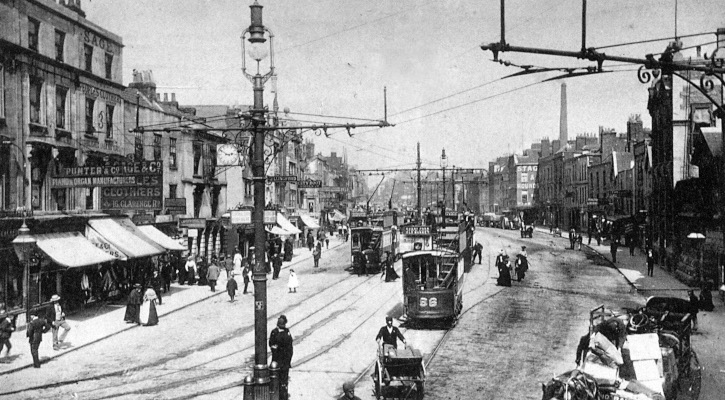
    <content:encoded xmlns:content="http://purl.org/rss/1.0/modules/content/"><![CDATA[<p><img src="https://ldap2.3ca.org.uk/about/news/latest-news/copy_of_LocalHistoryNewsMain.jpg" alt="" class="image-inline" title="" /></p>
<p><span class="discreet">Old Market Bristol</span></p>
<p>May is Local History month, so to celebrate we’ve been looking back at our heritage project, Vice and Virtue, that documented the rich history of Old Market in East Bristol, where The Trinity Centre calls home.</p>
<p><strong>Early History</strong></p>
<p>Old Market is an ancient marketplace which once stood outside the walls of the Old City and served as a main thoroughfare for goods arriving from London into Bristol.</p>
<p>The area contains some of Bristol’s oldest buildings, with over 60 listed buildings including the Methodist Central Hall, The Palace Hotel, and – of course – Holy Trinity Church, aka The Trinity Centre.</p>
<p>Following the demolition of Bristol Castle in 1656, the area was redeveloped and stone from the castle is said to have been used to repave Old Market Street, with many of the original 17th century building frontages remaining to this day.</p>
<p>Old Market Street was a thriving centre for trade in meat and vegetables, as well as being home to an assortment of small industries specialising in the production of farming utensils, as well as several brewers, maltsters, and public houses.</p>
<p><strong>Industrial Revolution</strong></p>
<p>The Industrial Revolution radically transformed Old Market, with major new businesses attracting workers from across the South West. New opportunities for employment led to East Bristol’s rapid urbanisation during this period. By 1881, the population of St Phillips rose from approximately 8,000 in 1801 to 50,000.</p>
<p>Religion was seen as a major civilising force that followed rapid urbanisation, and as such, many churches were built in these expanding urban areas. One such church was Holy Trinity Church, now The Trinity Centre, which was built between 1829 and 1832 by Thomas Rickman and Henry Hutchinson, two architects from Birmingham and seated 1,500 people.</p>
<p>The new railway added to the hustle and bustle of Old Market. Traffic increased significantly when an electric tramway was introduced in 1876. Unsurprisingly, the street market struggled to coexist with the tram network, and the market ceased to operate during the 19th century, which signalled the start of rapid change in the area.</p>
<p><strong>The Golden Years, 1900-1939</strong></p>
<p>Old Market Street, with its transport links, entertainment centres and range of shops, was an important and vibrant part of Bristol. The first 30 years of the 20th century were marked by a series of bold new development, including The King’s Cinema, The Methodist Central Hall and The Empire Theatre, catering to a new appetite for culture and the arts. While the traditional street market from which Old Market gets its name had faded out during this period, in its place came a range of new stores and retail businesses.</p>
<p>Old Market was part of the ‘golden mile’ of streets that stretched from Lawrence Hill to the City Centre, with a diverse offering of shops attracting visitors from far and wide.</p>
<p><strong>Decline and Rejuvenation</strong></p>
<p>Bristol breathed a sigh of relief after the Second World War, in which the city’s Historic City Centre was decimated during the Bristol Blitz, with Castle and Vine Street being flattened by bombings. However, across the city, including in Old Market, life did not return to normal immediately, with essential food items subject to rationing until 1954.</p>
<p>After the Second World War, Old Market had become increasingly isolated and sidelined. Now Castle Street was no more, Old Market stood on the other side of a bomb site which many Bristolians feared to cross. The electric trams ceased operation in 1941, and by the 1950s, St Philips Station was closed to passengers, further isolating the area.</p>
<p>The bombing of Bristol’s historic centre led to new approaches to housing, in particular high-rise flats of the 1950s, which dramatically changed the face of St Jude’s and Old Market. Old Market also had to compete with the newly built Broadmead shopping centre. The development of the ring road and roundabout as part of the 1966 Development Plan further isolated Old Market from the rest of Central Bristol. Within a dozen years, the ‘high street’ atmosphere of Old Market had all but disappeared, with a dramatic decrease in footfall in the area.</p>
<p>However, the idea that Old Market went into terminal decline after the Ring Road masks a more complex picture. Old Market’s isolation opened a space in which new cultures and subcultures emerged. Since then, Old Market has becoming a bustling centre of nightlife and culture, becoming a home for Bristol’s LGBTQ+ community, alongside a new and diverse offering of restaurants, bars and clubs. With one of the fastest growing populations in Bristol, Old Market’s future seems to be one defined by its eclectic mix of cultures and lifestyles.</p>
<p>Click <a class="external-link" href="https://archive.trinitybristol.org.uk/timelines">here</a> to explore Trinity's archives to find out more about the history of The Trinity Centre and Old Market.</p>
<p>This news item is based on information gathered as part of Trinity's <a href="https://ldap2.3ca.org.uk/activities/past-projects/heritage/news/vice-and-virtue" class="internal-link">Vice and Virtue</a> project.</p>]]></content:encoded>
    <dc:publisher>No publisher</dc:publisher>
    <dc:creator>&lt;object object at 0x7faffd6c2580&gt;</dc:creator>
    <dc:rights></dc:rights>
    
      <dc:subject>edson</dc:subject>
    
    
      <dc:subject>holy trinity church</dc:subject>
    
    
      <dc:subject>community-timeline</dc:subject>
    
    
      <dc:subject>heritage</dc:subject>
    
    <dc:date>2024-05-10T08:40:00Z</dc:date>
    <dc:type>News Item</dc:type>
  </item>


  <item rdf:about="https://ldap2.3ca.org.uk/activities/archive/edna-john">
    <title>Edna &amp; John</title>
    <link>https://ldap2.3ca.org.uk/activities/archive/edna-john</link>
    <description>John Peacock &amp; Edna Murphy 1945</description>
    <content:encoded xmlns:content="http://purl.org/rss/1.0/modules/content/"><![CDATA[<p> </p>
<p style="text-align: center; "><img src="https://ldap2.3ca.org.uk/activities/archive/IMG_1378.JPG/@@images/c6f35a5b-0537-4ced-ab80-cd507eb3efe8.jpeg" alt="" class="image-inline" title="" /></p>
<p style="text-align: center; "><img src="https://ldap2.3ca.org.uk/activities/archive/IMG_0303.JPG/@@images/db9df972-c9ba-4630-9730-2e7750795a08.jpeg" alt="" class="image-inline" title="" /></p>]]></content:encoded>
    <dc:publisher>No publisher</dc:publisher>
    <dc:creator>&lt;object object at 0x7faffd6c2580&gt;</dc:creator>
    <dc:rights></dc:rights>
    
      <dc:subject>holy trinity church</dc:subject>
    
    <dc:date>2022-12-05T12:22:09Z</dc:date>
    <dc:type>Event</dc:type>
  </item>


  <item rdf:about="https://ldap2.3ca.org.uk/activities/archive/lynne-peter">
    <title>Lynne &amp; Peter</title>
    <link>https://ldap2.3ca.org.uk/activities/archive/lynne-peter</link>
    <description>Lynne Peacock &amp; Peter Langdon 1971</description>
    <content:encoded xmlns:content="http://purl.org/rss/1.0/modules/content/"><![CDATA[<p style="text-align: center; "><img src="https://ldap2.3ca.org.uk/activities/archive/LynnePeacockPeterLangdon1971.JPG/@@images/b8a63db9-49e0-444f-bddc-b696416358e0.jpeg" alt="" class="image-inline" title="" /></p>]]></content:encoded>
    <dc:publisher>No publisher</dc:publisher>
    <dc:creator>&lt;object object at 0x7faffd6c2580&gt;</dc:creator>
    <dc:rights></dc:rights>
    
      <dc:subject>holy trinity church</dc:subject>
    
    <dc:date>2022-12-05T12:21:52Z</dc:date>
    <dc:type>Event</dc:type>
  </item>


  <item rdf:about="https://ldap2.3ca.org.uk/activities/archive/trinity-closes">
    <title>Trinity closes</title>
    <link>https://ldap2.3ca.org.uk/activities/archive/trinity-closes</link>
    <description>NTCA dissolves and Trinity closes in 2000</description>
    <content:encoded xmlns:content="http://purl.org/rss/1.0/modules/content/"><![CDATA[<p>Financial difficulties led to the dissolution of the NTCA in 2000 and the closure of the <span class="highlightedSearchTerm">Trinity</span> Hall.</p>
<p class="western">Fortunately, the building was reopened by <a href="https://ldap2.3ca.org.uk/activities/archive/old-news-items/new-trinity-community-association/resolveuid/e540a933188c4d87b519e85067136bc9" class="internal-link"><span class="highlightedSearchTerm">Trinity</span> <span class="highlightedSearchTerm">Community</span> Arts Ltd</a> in 2004.</p>]]></content:encoded>
    <dc:publisher>No publisher</dc:publisher>
    <dc:creator>&lt;object object at 0x7faffd6c2580&gt;</dc:creator>
    <dc:rights></dc:rights>
    
      <dc:subject>holy trinity church</dc:subject>
    
    <dc:date>2019-11-15T12:30:00Z</dc:date>
    <dc:type>Event</dc:type>
  </item>


  <item rdf:about="https://ldap2.3ca.org.uk/activities/archive/repairs-60s">
    <title>Repairs 60s</title>
    <link>https://ldap2.3ca.org.uk/activities/archive/repairs-60s</link>
    <description>Roof repairs were identified as needed in 1961</description>
    <content:encoded xmlns:content="http://purl.org/rss/1.0/modules/content/"><![CDATA[<p>A report on the church structure identifies that about £1,500 of repairs to the roof are recommended.</p>
<p>A report on the nave roof mentions that around £2,000 of repairs are urgently needed, and states that rot, beetles and poor fixings are other problems the building faces.</p>
<p>The roof is an ongoing issue for the building.</p>
<p>In November of the same year, some building work is started on the roof and windows are replaced and reset.</p>
<p>15 May 1964 - main building work is started on the roof.</p>
<p>January 1969 - A report on the fabric of the church from inspection made notes that it is in generally very good order. It recommends some repairs but also makes the point that, “none of these repairs are considered to be urgent enough to carry out in the face of any likelihood of the church closing.”...and “the churchyard is recognised by all responsible to be a problem and in the long run a scheme of re-landscaping would have to be examined.”</p>
<p>Additional repair works were carried out over an extended period between 1987-89.</p>
<p>Subesquent repairs to the South Aisle roof were carried out in 2012-13 and to the North Aisle roof in <a href="https://ldap2.3ca.org.uk/about/conservation" class="internal-link">2017-18</a>.</p>]]></content:encoded>
    <dc:publisher>No publisher</dc:publisher>
    <dc:creator>&lt;object object at 0x7faffd6c2580&gt;</dc:creator>
    <dc:rights></dc:rights>
    
      <dc:subject>holy trinity church</dc:subject>
    
    <dc:date>2019-11-12T13:55:00Z</dc:date>
    <dc:type>Event</dc:type>
  </item>


  <item rdf:about="https://ldap2.3ca.org.uk/activities/archive/wwi-trinity-hit">
    <title>WWI - Trinity hit</title>
    <link>https://ldap2.3ca.org.uk/activities/archive/wwi-trinity-hit</link>
    <description>War damage to the Holy Trinity Church</description>
    <content:encoded xmlns:content="http://purl.org/rss/1.0/modules/content/"><![CDATA[<p>The church was hit by an incendiary device causing damage to trusses, which were repaired in September of the same year.</p>]]></content:encoded>
    <dc:publisher>No publisher</dc:publisher>
    <dc:creator>&lt;object object at 0x7faffd6c2580&gt;</dc:creator>
    <dc:rights></dc:rights>
    
      <dc:subject>holy trinity church</dc:subject>
    
    <dc:date>2019-11-12T13:40:00Z</dc:date>
    <dc:type>Event</dc:type>
  </item>


  <item rdf:about="https://ldap2.3ca.org.uk/activities/archive/trinity-bells-replaced">
    <title>Trinity bells replaced</title>
    <link>https://ldap2.3ca.org.uk/activities/archive/trinity-bells-replaced</link>
    <description>Bells that were removed were replaced in 1927</description>
    <content:encoded xmlns:content="http://purl.org/rss/1.0/modules/content/"><![CDATA[<p>Trinity's bells and fittings were replaced by Llewellins and James Ltd of Castle Green, at a cost of £47. 10s.  An additional cost of £3. 10s is incurred through having to remove the floor to get the new bells in.</p>
<p>We have not found a record of why the original bells were removed prior to 1927. Possibly removal took place during WWI when bells - which contained large amounts of copper and tin - were removed from belfries during and melted down for military purposes.</p>
<p>During a later period when the building sat empty, the bells were taken and either sold for scrap or to another church.   The towers now have feature lighting thanks to <a href="https://ldap2.3ca.org.uk/about/conservation/news/trinity-is-set-for-a-bright-future" class="internal-link">funding from Heritage Lottery Fund and match funders to repair the building in 2017-18</a>.</p>]]></content:encoded>
    <dc:publisher>No publisher</dc:publisher>
    <dc:creator>&lt;object object at 0x7faffd6c2580&gt;</dc:creator>
    <dc:rights></dc:rights>
    
      <dc:subject>holy trinity church</dc:subject>
    
    <dc:date>2019-11-12T13:15:00Z</dc:date>
    <dc:type>Event</dc:type>
  </item>


  <item rdf:about="https://ldap2.3ca.org.uk/activities/archive/trinity-parish-magazine">
    <title>Trinity Parish Magazine</title>
    <link>https://ldap2.3ca.org.uk/activities/archive/trinity-parish-magazine</link>
    <description>Holy Trinity parish magazine, 1966</description>
    <content:encoded xmlns:content="http://purl.org/rss/1.0/modules/content/"><![CDATA[<p> </p>
<p style="text-align: center; "><img src="https://ldap2.3ca.org.uk/activities/archive/page2.png" alt="" class="image-inline" title="" /></p>
<p style="text-align: center; "><img src="https://ldap2.3ca.org.uk/activities/archive/page3.png" alt="" class="image-inline" title="" /></p>
<p style="text-align: center; "><img src="https://ldap2.3ca.org.uk/activities/archive/page4.png" alt="" class="image-inline" title="" /></p>]]></content:encoded>
    <dc:publisher>No publisher</dc:publisher>
    <dc:creator>&lt;object object at 0x7faffd6c2580&gt;</dc:creator>
    <dc:rights></dc:rights>
    
      <dc:subject>holy trinity church</dc:subject>
    
    <dc:date>2019-07-15T11:45:00Z</dc:date>
    <dc:type>Event</dc:type>
  </item>


  <item rdf:about="https://ldap2.3ca.org.uk/activities/archive/trinity-postcard">
    <title>Trinity postcard</title>
    <link>https://ldap2.3ca.org.uk/activities/archive/trinity-postcard</link>
    <description>Postcard of the Holy Trinity Church, c1915</description>
    <content:encoded xmlns:content="http://purl.org/rss/1.0/modules/content/"><![CDATA[<p><i><span class="discreet">Postcard of the Holy Trinity Church, c1915</span></i></p>
<p><i><span class="discreet"><img src="https://ldap2.3ca.org.uk/activities/archive/postcardback.JPG/@@images/6a4915f0-852c-4fd8-85a2-6711b09de4ee.jpeg" alt="" class="image-inline" title="" /><br /></span></i></p>]]></content:encoded>
    <dc:publisher>No publisher</dc:publisher>
    <dc:creator>&lt;object object at 0x7faffd6c2580&gt;</dc:creator>
    <dc:rights></dc:rights>
    
      <dc:subject>holy trinity church</dc:subject>
    
    <dc:date>2019-07-15T08:55:00Z</dc:date>
    <dc:type>Event</dc:type>
  </item>


  <item rdf:about="https://ldap2.3ca.org.uk/activities/archive/damage-in-the-war-years">
    <title>Damage in the war years</title>
    <link>https://ldap2.3ca.org.uk/activities/archive/damage-in-the-war-years</link>
    <description>During WWI and WWII Trinity faced several threats and damage</description>
    <content:encoded xmlns:content="http://purl.org/rss/1.0/modules/content/"><![CDATA[<p><span class="discreet"><i> Holy Trinity Church, date and photographer unknown</i></span></p>
<ul>
<li>April 1927 - The original bells and fittings, which had been removed for scrap metaling were replaced with new ones</li>
<li>March 15-16 1941 - The church was hit by an incendiary device   causing damage to trusses, which were repaired in September of the same   year</li>
<li>24 July 1946 - The Church received payment from the War Damages Commission.</li>
</ul>]]></content:encoded>
    <dc:publisher>No publisher</dc:publisher>
    <dc:creator>&lt;object object at 0x7faffd6c2580&gt;</dc:creator>
    <dc:rights></dc:rights>
    
      <dc:subject>holy trinity church</dc:subject>
    
    <dc:date>2019-07-12T15:55:00Z</dc:date>
    <dc:type>Event</dc:type>
  </item>


  <item rdf:about="https://ldap2.3ca.org.uk/activities/archive/wedding-of-jane-william">
    <title>Wedding of Jane &amp; William</title>
    <link>https://ldap2.3ca.org.uk/activities/archive/wedding-of-jane-william</link>
    <description>Trinity's closure was marked with a final marriage ceremony</description>
    <content:encoded xmlns:content="http://purl.org/rss/1.0/modules/content/"><![CDATA[<p style="margin-bottom: 0cm; line-height: 100%; "><i><span class="discreet">Holy Trinity Church, c1970, photographer unknown</span></i></p>
<p style="margin-bottom: 0cm; line-height: 100%; ">The last marriage service was held in the Holy Trinity Church - the marriage of William J.J. Ballard to Jane H. Dix.</p>
<p style="margin-bottom: 0cm; line-height: 100%; ">This was the last recorded in Trinity's marriage certificate stubs (no. 427). This was also confirmed in a small evening post article on the same day.</p>
<p style="margin-bottom: 0cm; line-height: 100%; ">A 'service of praise' is recorded on 14 March, which may in fact have been Holy Trinity's last official service. On 28 March the final service recorded in Holy Trinity's service register was taken by Terence Kelshaw.  There was a morning and an evening service on this day - Mothering Sunday, though the service may have been held at Easton Family Centre due to the Church's closure.</p>
<p style="margin-bottom: 0cm; line-height: 100%; ">With the final hymn ringing around the almost vacant pews of Holy Trinity, a praise song and a funeral rite calling time on a church once described as 'the Cathedral of the East'.</p>
<p style="margin-bottom: 0cm; line-height: 100%; ">The music that followed could not have been more different...</p>
<style type="text/css"></style>]]></content:encoded>
    <dc:publisher>No publisher</dc:publisher>
    <dc:creator>&lt;object object at 0x7faffd6c2580&gt;</dc:creator>
    <dc:rights></dc:rights>
    
      <dc:subject>holy trinity church</dc:subject>
    
    <dc:date>2019-07-12T15:50:00Z</dc:date>
    <dc:type>Event</dc:type>
  </item>


  <item rdf:about="https://ldap2.3ca.org.uk/activities/archive/trinitys-redundancy">
    <title>Trinity's redundancy</title>
    <link>https://ldap2.3ca.org.uk/activities/archive/trinitys-redundancy</link>
    <description>A rapidly dwindling congregation and cost of repair meant the Church began to explore options</description>
    <content:encoded xmlns:content="http://purl.org/rss/1.0/modules/content/"><![CDATA[<p style="margin-bottom: 0cm; line-height: 100%; ">The 60s saw Trinity's decline as a church.</p>
<p style="margin-bottom: 0cm; line-height: 100%; ">The 1961 Bristol census shows that the population of the parish of Holy  Trinity has fallen dramatically to 3,354 , from 5,182 in 1951 (allowing  for changes to the parish boundaries). The Bristol Diocesan Finance  Board use this as an example of a reduced need to support the Church.</p>
<p style="margin-bottom: 0cm; line-height: 100%; ">A series of expensive repair works were identified during the period, including cleaning to stonework anessential repairs to roof timbers. In 1964 repairs to steelwork were carried out, but costs of upkeep quickly became too costly for the church to bear.</p>
<p style="margin-bottom: 0cm; line-height: 100%; ">In 1968, a rapidly dwindling congregation and lack of money led to the church to explore avenues for redundancy.</p>
<p style="margin-bottom: 0cm; line-height: 100%; "> </p>
<style type="text/css"></style>]]></content:encoded>
    <dc:publisher>No publisher</dc:publisher>
    <dc:creator>&lt;object object at 0x7faffd6c2580&gt;</dc:creator>
    <dc:rights></dc:rights>
    
      <dc:subject>holy trinity church</dc:subject>
    
    <dc:date>2019-07-12T15:45:00Z</dc:date>
    <dc:type>Event</dc:type>
  </item>


  <item rdf:about="https://ldap2.3ca.org.uk/activities/archive/trinity-relisted">
    <title>Trinity Grade II* listed</title>
    <link>https://ldap2.3ca.org.uk/activities/archive/trinity-relisted</link>
    <description>Trinity was designated a Grade II* Listed building</description>
    <content:encoded xmlns:content="http://purl.org/rss/1.0/modules/content/"><![CDATA[<p style="margin-bottom: 0cm; line-height: 100%; "><span class="discreet"><i>Illustration of Holy Trinity Church, c1890</i></span></p>
<p style="margin-bottom: 0cm; line-height: 100%; ">Trinity was originally designated a Grade II Listed building in January 1959.</p>
<p style="margin-bottom: 0cm; line-height: 100%; ">On 30 December 1994 the Church was re-listed by the Department of National Heritage as Grade II* - This means it is a 'particularly important building of more than special interest.'</p>
<p style="margin-bottom: 0cm; line-height: 100%; ">The listing details on Historic England's website states:</p>
<p style="margin-bottom: 0cm; line-height: 100%; "><i><span class="discreet">Church. 1829-32. By Thomas Rickman and Hutchinson. Later work            c1882 by John Bevan and 1905 by WV Gough. Bath stone ashlar              with a slate-roofed nave and leaded aisles. Chancel and aisled           nave. Perpendicular Gothic Revival style.                                Small semi-hexagonal apse with pointed windows, beneath a                crenellated, gabled end with angled buttresses and a large               Perpendicular E window. The N aisle is 4 bays, with                      segmental-headed windows between weathered buttresses, and a             coped parapet ending with crocketed pinnnacles; at the W end             is an arched doorway; 2-light clerestory windows. Similar S              elevation. The W front has a pair of crenellated octagonal               towers of openwork tracery flanking 3 Tudor-arched doorways,             the largest in the middle within a label mould with chamfered            reveals and quatrefoils in the spandrels; above is a large               5-light window similar to the E end, and a traceried                     balustrade with open merlons and a cross finial to the top of            the gable.                                                               INTERIOR: all fittings have been removed and a floor inserted            near the top of the nave arcade. This consists of 4-bay arcade           of square piers without capitals and pointed arches, with                slender stanchions between for the absent gallery. Flights of            stairs lead up either side from the narthex. An early                    Commissioners' church, now put to community use.                         (Gomme A, Jenner M and Little B: Bristol, An Architectural               History: Bristol: 1979-: 292; Crick C: Victorian Buildings in            Bristol: Bristol: 1975-: 9).</span></i></p>
<style type="text/css"></style>]]></content:encoded>
    <dc:publisher>No publisher</dc:publisher>
    <dc:creator>&lt;object object at 0x7faffd6c2580&gt;</dc:creator>
    <dc:rights></dc:rights>
    
      <dc:subject>holy trinity church</dc:subject>
    
    <dc:date>2019-07-12T15:30:00Z</dc:date>
    <dc:type>Event</dc:type>
  </item>


  <item rdf:about="https://ldap2.3ca.org.uk/activities/archive/trinity-is-listed">
    <title>Trinity is listed</title>
    <link>https://ldap2.3ca.org.uk/activities/archive/trinity-is-listed</link>
    <description>Trinity was designated a Grade II Listed building</description>
    <content:encoded xmlns:content="http://purl.org/rss/1.0/modules/content/"><![CDATA[<p style="margin-bottom: 0cm; line-height: 100%; "><span class="discreet"><i>Holy Trinity Church, c1890, photographer unknown</i></span></p>
<p style="margin-bottom: 0cm; line-height: 100%; ">The building was included in the list for protected  buildings in Bristol by ﻿﻿the Ministry for Housing and Local Government.</p>
<p style="margin-bottom: 0cm; line-height: 100%; ">Trinity was designated a Grade II Listed building.</p>
<p style="margin-bottom: 0cm; line-height: 100%; ">On 30 December 1994 the Church was re-listed by the Department of National Heritage as Grade II* - This means it is a 'particularly important building of more than special interest.'</p>
<p style="margin-bottom: 0cm; line-height: 100%; ">The listing details on Historic England's website states:</p>
<p style="margin-bottom: 0cm; line-height: 100%; "><i><span class="discreet">Church. 1829-32. By Thomas Rickman and Hutchinson. Later work            c1882 by John Bevan and 1905 by WV Gough. Bath stone ashlar              with a slate-roofed nave and leaded aisles. Chancel and aisled           nave. Perpendicular Gothic Revival style.                                Small semi-hexagonal apse with pointed windows, beneath a                crenellated, gabled end with angled buttresses and a large               Perpendicular E window. The N aisle is 4 bays, with                      segmental-headed windows between weathered buttresses, and a             coped parapet ending with crocketed pinnnacles; at the W end             is an arched doorway; 2-light clerestory windows. Similar S              elevation. The W front has a pair of crenellated octagonal               towers of openwork tracery flanking 3 Tudor-arched doorways,             the largest in the middle within a label mould with chamfered            reveals and quatrefoils in the spandrels; above is a large               5-light window similar to the E end, and a traceried                     balustrade with open merlons and a cross finial to the top of            the gable.                                                               INTERIOR: all fittings have been removed and a floor inserted            near the top of the nave arcade. This consists of 4-bay arcade           of square piers without capitals and pointed arches, with                slender stanchions between for the absent gallery. Flights of            stairs lead up either side from the narthex. An early                    Commissioners' church, now put to community use.                         (Gomme A, Jenner M and Little B: Bristol, An Architectural               History: Bristol: 1979-: 292; Crick C: Victorian Buildings in            Bristol: Bristol: 1975-: 9).</span></i></p>
<style type="text/css"></style>]]></content:encoded>
    <dc:publisher>No publisher</dc:publisher>
    <dc:creator>&lt;object object at 0x7faffd6c2580&gt;</dc:creator>
    <dc:rights></dc:rights>
    
      <dc:subject>holy trinity church</dc:subject>
    
    <dc:date>2019-07-12T15:30:00Z</dc:date>
    <dc:type>Event</dc:type>
  </item>


  <item rdf:about="https://ldap2.3ca.org.uk/activities/archive/churchlife-1">
    <title>Churchlife</title>
    <link>https://ldap2.3ca.org.uk/activities/archive/churchlife-1</link>
    <description>An brief history of the Holy Trinity Church</description>
    <content:encoded xmlns:content="http://purl.org/rss/1.0/modules/content/"><![CDATA[<p><span class="discreet"><i>Holy Trinity Church, c1890, photographer unknown</i></span></p>
<p>The Holy Trinity was built as part of a national  programme of church   building approved by Parliamentary commission.  Funds for the  programme  totalling one and a half million pounds came in  part from  the spoils of <strong>Napoleonic War</strong>, hence these churches are variously known as <strong>Waterloo Churches </strong>(after the famous battle), Commissioners Churches and One Million Churches.</p>
<p>The Holy Trinity Church was built between 1829 and 1832, designed by renowned Birmingham architects <a href="http://en.wikipedia.org/wiki/Thomas_Rickman">Thomas Rickman</a> and <a href="http://en.wikipedia.org/wiki/Henry_Hutchinson">Henry Hutchinson</a><sup><a href="http://en.wikipedia.org/wiki/Trinity_Centre#cite_note-IoE-0"></a></sup>.</p>
<p>The last rector to serve at Trinity, Terence Kelshaw, explains:<br /><i>“Trinity    was a society church. It was built by Harpur’s for their workers so  in   order to work at Harpur’s you had to show your seven year  certificate   which was a certificate directly signed to say you had  attended Sunday   school or church for seven years...you needed the  certificate to get   work. It was called a seven year certificate.  That’s why there was a   balcony in there for the workers children - so  the children sat up in  the balcony. They [Trinity and surrounding  churches] were built as  company gifts to their workers...”</i></p>
<p>The population of St Phillips was deemed big enough to need the new    church and Holy Trinity became a parish (a division of the city served    by its own church) in its own right. The church was able to seat 2,000    people, though only 1,500 were ‘free’ seats – the others near the  front   were paid for by keen churchgoers, meaning that they could sit  ‘closer   to God.’ Although Trinity was a ‘daughter’ Church to St  Phillips and St   James – known colloquially as "Pip and Jay" – it  became the most  highly  esteemed in the area, owing to a combination of  its position,  size,  level of activity and vividness of its stained  glass window.</p>]]></content:encoded>
    <dc:publisher>No publisher</dc:publisher>
    <dc:creator>&lt;object object at 0x7faffd6c2580&gt;</dc:creator>
    <dc:rights></dc:rights>
    
      <dc:subject>holy trinity church</dc:subject>
    
    <dc:date>2019-07-12T14:25:00Z</dc:date>
    <dc:type>Event</dc:type>
  </item>


</rdf:RDF>
